Find the right advice.
Settling in, in five steps — the same five as your arrival checklist. Each has the Seoul essentials, official links and our features.
Study & careers.
Visas & residence.
What to know in Seoul
- Check your entry route first: some nationalities need a visa, others K-ETA, and every arrival should check the e-Arrival Card rules before flying.
- If you stay longer than 90 days, register for a residence card (ARC) — book the HiKorea appointment early, because Seoul slots often fill weeks ahead.
- A booked appointment is not a filing: bring every document listed for your visa type, or you may have to rebook.
- Employers on some work visas require a health check; use a clinic approved for immigration purposes.
Find your pathway
Everyone
The first 90 days
Residence card, HiKorea appointments and health checks.
English teachers · E-2
Teaching in Korea
Contracts, your first year, renewal and the month-by-month timeline.
Students · D-2 / D-4 / D-10
Studying and after graduation
Study, part-time work permission and job-seeking after you graduate.
Work, family & residence · E-7 / F
Other work and residence visas
E-7 steps, F-visa families, renewal deadlines and the printable guide.
Housing.
What to know in Seoul
- Book short-term accommodation for your first weeks so you can view flats in person before signing anything.
- Know the deposit models: wolse (monthly rent with a deposit) and jeonse (a large lump-sum deposit, no monthly rent). Deposit size changes your risk.
- Before paying a deposit, check the property's registry record for debts and confirm the landlord's identity.
- After moving in, report your address change and get the fixed-date stamp (확정일자) on your lease at the community centre to help protect your deposit.
Read in the magazine
Banking & money.
What to know in Seoul
- Most banks give full accounts and cards only once you have an ARC; before that, expect a limited account or rely on cash and foreign cards.
- Bring your passport, ARC and, ideally, an employment or enrolment document — branches near universities and foreign-resident centres are often easiest.
- New accounts may have low transfer limits for the first weeks; ask how to raise them.
- For sending money home, compare total cost (fee plus exchange rate), not just the fee, and register a remittance bank or licensed app.
Read in the magazine
Phones & identity.
What to know in Seoul
- Use a prepaid SIM or eSIM on arrival; most postpaid contracts need an ARC.
- Many Korean apps and websites check identity by text message (본인인증), which usually needs a phone line in your own name.
- Once your phone is registered in your name, set up maps, delivery, transport and banking apps.
- A T-money or Climate Card covers subways and buses from day one.
Read in the magazine
Documents & admin.
What to know in Seoul
- Degrees and criminal record checks for visas often need an apostille or consular legalisation from your home country — start months ahead.
- Carry spare passport-style photos; Korean ID photos are 3.5 × 4.5 cm and photo booths in stations can print them.
- Keep digital and paper copies of your passport, visa, contract and lease together.
- Your local community centre handles address registration and many certificates.
Read in the magazine
Every feature by topic.
43 guides available
Start here
Before you arrive in Seoul
A calm pre-departure checklist: what to settle before you board so your first 48 hours in Seoul are about arriving, not worrying about what you've forgotten.
ReadYour first 48 hours
You do not need to solve Seoul in one day. Prioritise safety, connectivity, money, transport, and a reliable document trail.
ReadPhone & identity
Housing
Healthcare
Search the clinic directoryLearning Korean
Weekends
Safety
Residence & visas
Immigration
Money
Open the account you actually need
Banking, remittance, tax and pension records become easier when you know the purpose of each account and keep a clear trail of money moving in and out.
ReadBanking & everyday payments
Get your account, bank card, transport and shopping apps working together.
ReadSending money home — and receiving it in Korea
Compare the amount that arrives, not just the advertised fee.
ReadWorking in Korea
The numbers behind your pay
Your worker status, workplace size and contracted hours matter. Read the whole working week, then reconcile the payslip with the money that reaches your bank.
ReadPart-time work that fits around a degree
The right student job respects your visa permission, your timetable and your Korean level. Here is what is realistically available, and where to look.
ReadHealth checks when arriving in Korea and starting work
Know which examination to book — and avoid paying for the wrong one.
ReadTeaching & education
Mental health & wellbeing
Neighbourhoods
Seoul on foot
Getting around
Choose for the trips you make
A card that still taps may no longer carry its old benefits. The expanded edition explains the October 2026 transition and the registration step for resident benefits.
ReadSeoul by subway, one leg at a time
Three checks get you almost anywhere: the right station, the right direction and the right exit. Plan in KakaoMetro, check the street in a map app, and treat every transfer as part of the journey.
ReadSeoul by bicycle, from first Ttareungi to riverside afternoon
Set up the right login, understand that every ride has its own clock, and never walk away until the app confirms the return. Then start beside the river.
ReadCustom photo transport cards: a fun first-day option
Some kiosks print a rechargeable transport card with your own photo or design. They are a souvenir and a practical card — but they arrive with no balance, and terms change.
ReadAccounts & apps
Studying in Seoul
Everyday life
Your neighbourhood starts at the community centre
The 주민센터 is where everyday local questions, certificates and community classes begin. Find the right desk, arrive with one clear request, and find a reason to come back.
ReadYour district, decoded: six Seoul neighbourhoods
Each Seoul district runs its own office, website and local services, and your address decides which immigration office you use. Here is where to go in Mapo, Yongsan, Seodaemun, Gangnam, Seongdong and Dongdaemun.
ReadRecycling in Seoul: the right waste, in the right place
Separate food scraps, clean recyclables and general rubbish — then follow your building’s collection arrangements. A small kitchen routine makes the system much easier.
ReadShopping & setting up home
From your first supermarket trip to furnishing your apartment.
ReadSpend less, live well: smart shopping in Seoul
Coupons, everyday discounts and smarter shopping — without buying more than you need.
ReadSending & receiving parcels in Korea
Korea Post, DHL and FedEx, customs declarations and your Personal Customs Clearance Code (PCCC).
ReadVolunteer in Seoul: make Seoul yours, give something back
Grassroots groups welcoming English speakers, official 1365 programmes, and what to check before you sign up.
Read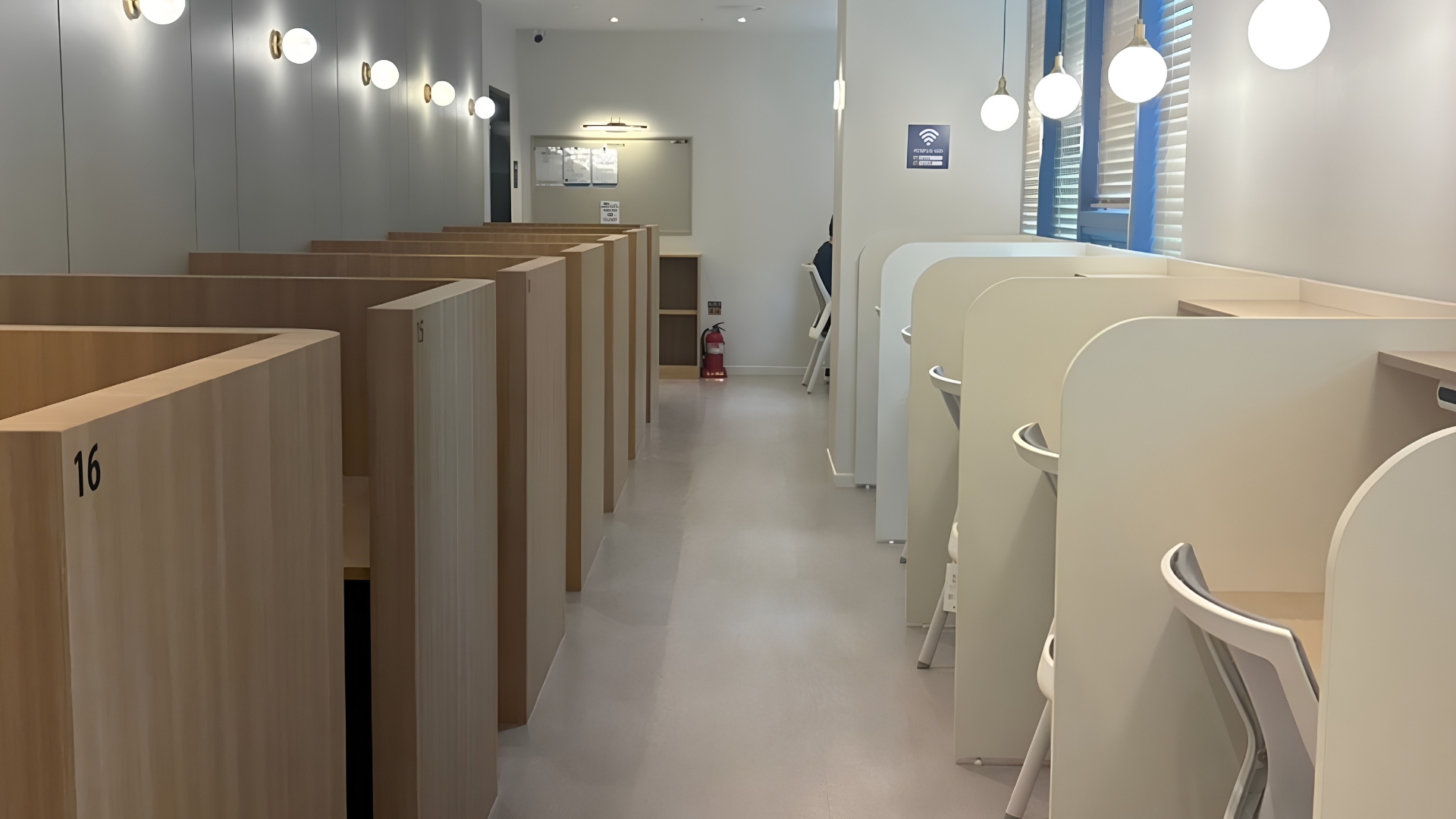 New online guide · Reviewed October 2026
Study Cafés in Seoul: Where to Study, Work & Concentrate
A desk when you need one. Silence when you want it.
ReadJobs & Visas / Employment
Discover Seoul
A Night in a Hanok: The Complete Seoul Stay Guide
Stay in traditional Korea, without leaving modern Seoul. Choose your neighbourhood, understand the comforts and compromises, and book with confidence.
Read New online guide · Reviewed October 2026Read Your Way Into Korea: The Settle Seoul Bookshelf
Before you arrive, discover the stories. Once you're here, discover the places behind them.
Read New online guide · Reviewed October 2026
Coffee in Korea: From Dabang to Iced Americano
One country. Thousands of cafés. A whole culture in a cup.
Read New online guide · Reviewed October 2026
Hiking in Seoul: Bukhansan & Beyond
From subway platform to granite summit, quiet forest trails and mountain food.
Read New online guide · Reviewed October 2026
Visiting Korean Temples: Etiquette, Bowing & Symbols
A friendly visual guide to Seoul’s mountain temples and Buddhist traditions.
Read