Coffee in Korea: From Dabang to Iced Americano.
One country. Thousands of cafés. A whole culture in a cup.
Reviewed October 2026 · New online guide. General planning guidance; source types and verification limits are stated below. Not included in the original 2027 print edition; included in the complete Digital Guidebook.
- A coffee can be a quick commute ritual or an afternoon destination.
- Learn one order; ask before adding milk alternatives or decaf.
- Use official café links to check the branch before you travel.
More than a caffeine stop
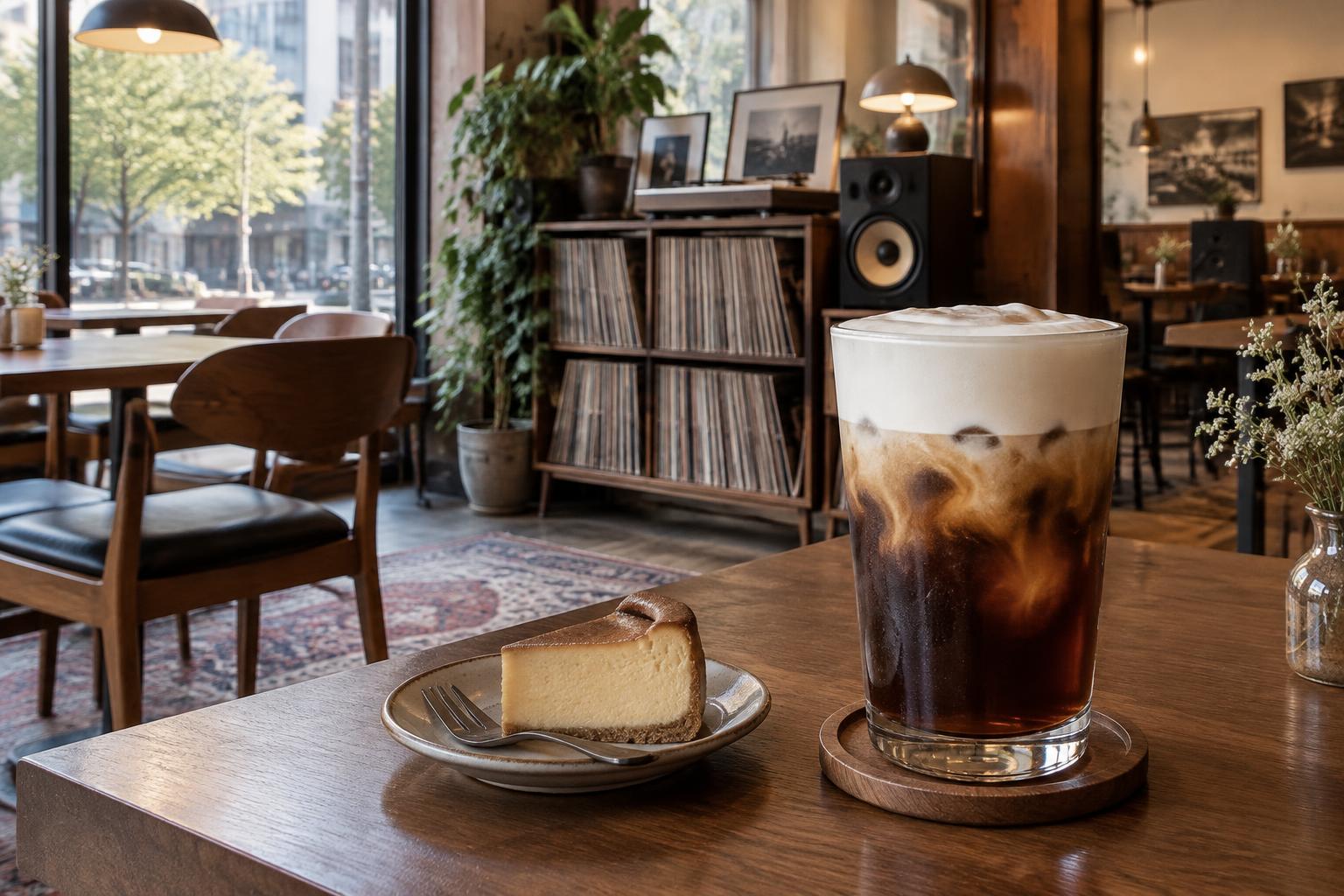
In Seoul, ‘shall we get coffee?’ can mean a catch-up, a study session, a date, a pause between errands or simply five minutes to yourself. A tiny takeaway counter and a destination roastery are part of the same story: one values speed, the other invites you to linger. Neither is the ‘correct’ way to drink coffee.
106,452 coffee shops · 2023
- Nationwide, not Seoul alone, and not an October 2026 count. The government’s 21 August 2026 release reports 2023 coffee-shop numbers, representing 13.4% of foodservice establishments.
₩3.74 trillion · 2024
- The same release estimates the domestic coffee products market in 2024. This is not a figure for café takings or the price of going out for coffee.
Try a budget takeaway on an ordinary morning, then give one slow café visit a whole afternoon. The contrast tells you more than a list of fashionable addresses.
From a meeting room to a cup on the move
Coffee reached Korea in the late Joseon period. Emperor Gojong is often associated with its early court history, but the familiar royal story is not proof of a single first cup or the beginning of everyday café life. The social rooms, instant packets and espresso bars that followed each changed who coffee was for.
- 01Late Joseon · an unfamiliar drink
Coffee initially circulated in limited diplomatic and elite settings. Avoid reducing a much longer cultural story to a royal anecdote.
- 02Mid-20th century · the dabang
Tea and coffee rooms became places to meet, listen to records and exchange ideas. Hakrim’s 1956 beginnings and Dok-Dabang’s student and literary history are surviving examples, not a template for every dabang.
- 031976 · the small sweet packet
The Ministry of Culture dates Korean coffee mix to 1976: instant coffee, creamer and sugar made a warm cup quick to prepare in homes and workplaces.
- 04Late 1990s onward · espresso & craft
International espresso chains expanded, followed by a specialty scene focused on roasting, beans and brewing. Today cheap takeaway and careful hand-drip thrive side by side.
What is a dabang?
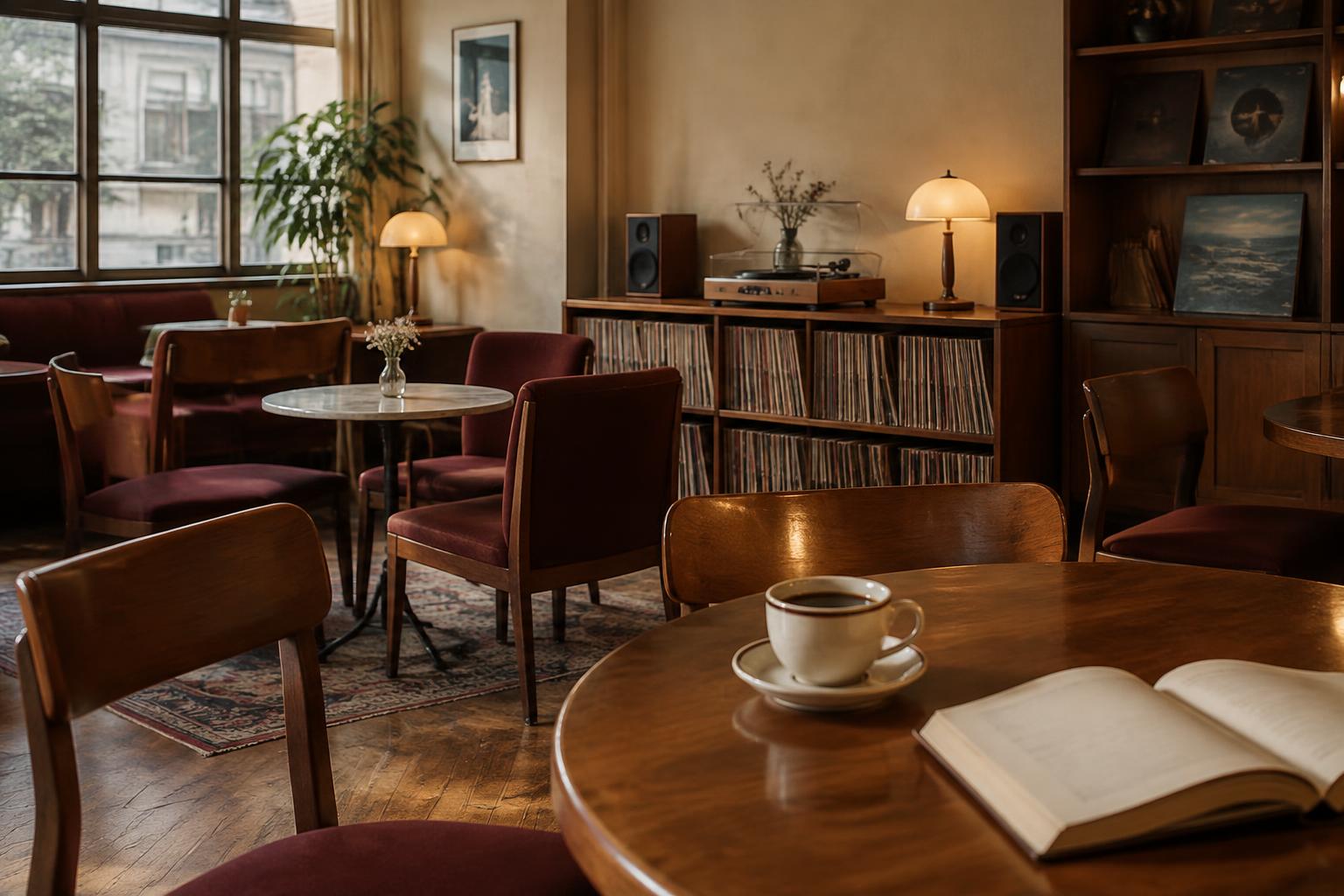
다방 (dabang) literally points to a tea room, but its Korean cultural associations extend well beyond tea. Think of a room where the soundtrack and the conversation matter as much as the cup. In the literary and student venues described here, photographs, records and memories are part of the atmosphere. The term has varied across eras and settings; not every dabang is a historic music café.
Hakrim · a surviving classic
- Established in 1956 in Hyehwa/Daehak-ro, with a history tied to artists and university intellectuals. Visit Korea highlights Vienna coffee and cream cheesecake.
- Go for a deliberate pause around the theatre streets, not an assumption that every seat is a laptop workstation.
Dok-Dabang · a continued story
- The Sinchon meeting place closed in 2005 and reopened in 2013, according to Visit Seoul. Old photos and a bulletin board connect the present café with its student and literary past.
- A reopened heritage venue is not the same thing as an unchanged interior operating continuously for decades.
Coffee Hanyakbang · contemporary nostalgia
- Its operator describes a hidden Euljiro alley setting and coffee made with the care of a herbal prescription. This is a modern nostalgic coffeehouse, not a centuries-old dabang.
- Enjoy the mood without mistaking antique styling for a documented operating history.
Find your cup
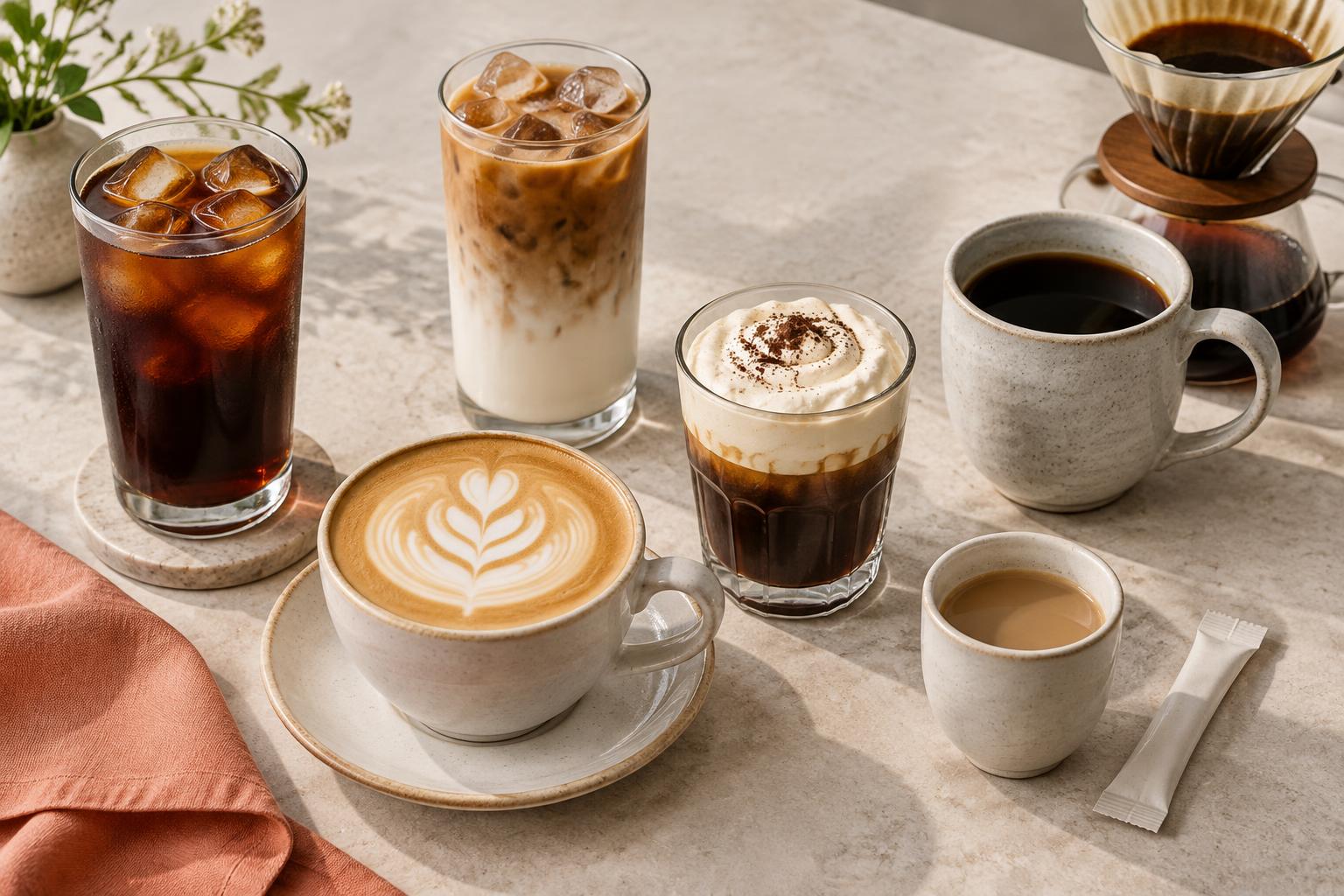
Start with the everyday staples, then follow your taste toward cream, filter coffee or something without coffee at all. Korean menus borrow international names freely; the same drink can have a different recipe from one shop to the next.
Everyday staple
Americano
아메리카노 · amerikano
Espresso and water, usually without sugar. 아아 (aa) is shorthand for iced Americano; 얼죽아 (eoljuk-a) jokes about choosing it even in freezing weather.
Everyday staple
Café latte
카페라떼 · kaperatte
Espresso softened with milk. A plain latte is not automatically sweet; recipes and milk choices vary.
Sweet favourite
Vanilla latte
바닐라라떼 · banillaratte
A milky espresso drink with vanilla sweetness. Ask about reducing syrup rather than assuming the recipe can change.
Specialty menu
Einspänner
아인슈페너 · ainsyupeneo
Coffee under a thick cream layer. Vienna coffee and modern einspänner recipes differ; some contain milk, and many are iced-only.
Slow & specialty
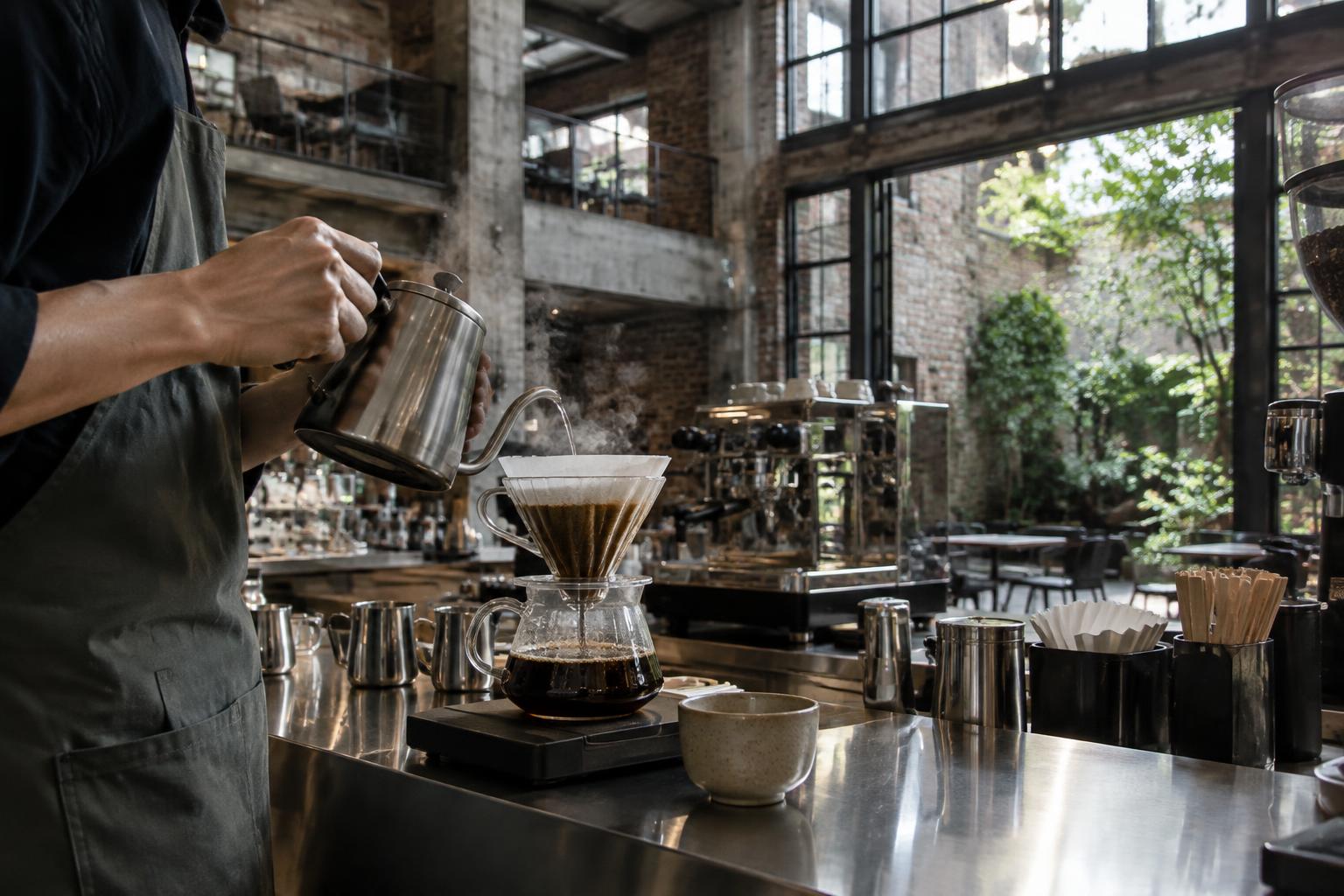
Hand-drip coffee
핸드드립 커피 · haendeudeurip keopi
Filter coffee brewed to order. Ask which beans are available; an iced version may use a different brewing recipe.
Everyday instant ritual
Coffee mix
믹스커피 · mikseukeopi
Instant coffee, sugar and creamer in a small packet. Common in offices and homes, not a guaranteed café menu item; usually prepared hot.
Trend, not universal
Dalgona coffee
달고나 커피 · dalgona keopi
Whipped sweet coffee over milk, associated with the 2020 home-drink trend. Not every café serves it; it is distinct from the crunchy dalgona candy.
Without coffee
Matcha latte
말차라떼 · malcharatte
Green tea and milk, often sweetened. Contains tea caffeine even though there is no coffee; ask about the base mix and milk.
Without coffee
Sweet potato latte
고구마라떼 · gogumaratte
A sweet, often thick milk drink made with sweet potato. Usually not an espresso latte; ingredients and seasonal availability vary.
Grain drink
Misutgaru
미숫가루 · misutgaru
Roasted mixed-grain powder blended with water or milk, often sweetened. Grain mixes can contain allergens; confirm ingredients rather than assuming it is gluten-free.
Without coffee
Yuja tea
유자차 · yujacha
Citrus preserve diluted with water, usually sweet. Some cafés offer an iced version; it is not the same as brewed black tea.
Traditional tea
Ssanghwacha
쌍화차 · ssanghwacha
A dark herbal-style tea associated with traditional tea rooms and some dabang. Ingredients and toppings vary; check allergies and do not treat it as medical advice.
Build your coffee order in Korean
One cup, the temperature you want and whether you are staying or taking it away. Optional additions are phrased as questions: decaf, alternative milk and recipe changes depend on the café and may cost extra. For an allergy, confirm ingredients and cross-contact directly; this order is not an allergy guarantee.
Your order
아이스 아메리카노 한 잔 주세요. 포장해 주세요.
One iced americano, please. To take away, please.
Aiseu amerikano han jan juseyo. Pojanghae juseyo.
At the kiosk, one screen at a time
Kiosks differ, but the sequence is usually familiar. An English menu may help; if you cannot find it, show your Korean order to a staff member rather than guessing through paid options.
- 01Choose the menu
Look for coffee or beverages, then your drink. Names may appear in Korean or English. Check the item picture, size and total rather than assuming the first tile is the basic version.
- 02Set temperature & options
HOT / 따뜻한 (ttatteuthan) and ICE / 아이스 (aiseu) are common. Select extra shots or syrup only if wanted; some signature drinks have a fixed recipe.
- 03Here or takeaway, then pay
매장 (maejang) means in-store; 포장 (pojang) means takeaway. Check the final amount. Foreign cards do not work on every kiosk or domestic payment option; ask staff if your card is rejected.
- 04Keep your number
Take the receipt or order ticket, watch the collection screen or listen for your number. Some shops give a vibrating pager. Collect at the counter, then return reusable cups and trays where requested.
Coffeehouses worth building a day around
A curated starting list, not a ranking or a live opening-hours feed. Historic rooms, contemporary nostalgia, roasting craft and architecture each offer a different reason to go. Follow the operator or tourism listing to confirm the branch, menu and access before visiting.
Historic · Hyehwa / Daehak-ro
Hakrim Dabang
학림다방
A café established in 1956, tied to artists and intellectuals. Visit Korea highlights Vienna coffee and cream cheesecake; listen to the room as well as ordering a cup.
Pair it with: Daehak-ro theatre streets and a book from your reading list.
119 Daehak-ro, Jongno-gu · 2F
Historic · Sinchon
Dok-Dabang / Doksuri Dabang
독수리다방
A student and literary meeting place whose story continued with its 2013 reopening. Visit Seoul describes the photos and note-sharing bulletin board.
Pair it with: A look around Sinchon’s university neighbourhood.
36 Yeonse-ro, Seodaemun-gu · 8F
Nostalgia · Euljiro
Coffee Hanyakbang
커피한약방
A contemporary nostalgic coffeehouse hidden in older commercial alleys. The operator’s herbal-prescription metaphor is about care in brewing, not medical benefits or centuries of café history.
Pair it with: A considerate wander through Euljiro’s working streets.
16-6 Samil-daero 12-gil, Jung-gu
Specialty · Mapo / Dohwa
Fritz Coffee Company · Dohwa
프릳츠 도화점
An independent roasting-and-bakery stop for comparing a crafted coffee with your everyday takeaway. Use the official directory to select Dohwa rather than another Fritz branch.
Pair it with: A neighbourhood stroll around Mapo and Gongdeok.
17 Saechang-ro 2-gil, Mapo-gu
Architecture · Hapjeong
Anthracite · Hapjeong
앤트러사이트 합정
Visit Seoul describes a former shoe factory retaining industrial elements. Come for the conversation between a working building’s past and a contemporary coffee space.
Pair it with: Hapjeong’s smaller streets and nearby bookshops.
10 Tojeong-ro 5-gil, Mapo-gu
Architecture · Anguk
Onion · Anguk
어니언 안국
A hanok café and bakery described by Visit Korea. Traditional architectural surroundings do not make this a historic dabang; it is a contemporary café experience.
Pair it with: Anguk and a respectful daytime neighbourhood visit; follow Bukchon’s visitor restrictions.
5 Gyedong-gil, Jongno-gu
Specialty · Seongsu / Seoul Forest
Center Coffee · Seoul Forest
센터커피 서울숲
A specialty coffee stop beside Seoul Forest, with a park-facing setting described by Visit Korea. Check the current beans and brewing menu at the shop.
Pair it with: A Seoul Forest park break and Seongsu’s contemporary streets.
28-11 Seoulsup 2-gil, Seongdong-gu
What might a cup cost?
Illustrative planning estimates only, not live menus, guaranteed prices or quoted offers. Size, hot/iced versions, location, beans and additions all change the bill. Look at the displayed menu before ordering.
Budget takeaway · ₩1,500–3,000
- A rough Americano allowance. Mega Coffee, Compose Coffee and Paik’s Coffee are examples of budget chains, not endorsements or promises of a particular current price.
Standard chain · ₩3,500–6,000
- A useful ballpark for a basic coffee; larger sizes, seasonal menus and milk drinks may fall outside it.
Specialty espresso · ₩5,000–8,000
- You may be paying for bean selection, roasting and an individual shop’s setting as well as the drink. More expensive does not automatically mean better for your taste.
Cream signatures / hand-drip · ₩6,000–10,000+
- Rare beans and elaborate signature recipes can cost more. Ask about a hand-drip bean’s price before choosing it.
A budget coffee buys a convenient cup. A specialty visit can buy a little time, attention and discovery. Leave room for both, rather than treating one as a cheaper version of the other.
The small rules that make a café work
A comfortable seat does not mean an unlimited desk rental. Policies belong to the individual café; ask before settling in for a long reading or work session.
Seats & screens
- 1인 1음료 (irin il eumnyo) means one drink per person; some seated venues require it.
- Check laptop, outlet, photography and time-limit policies. Avoid occupying a large table alone when a small shop is busy.
Quiet & considerate
- Keep calls brief or step outside. Ask before photographing identifiable customers or staff; a beautiful room is still someone else’s afternoon.
- Do not assume an atmospheric heritage café welcomes prolonged laptop work.
Pay & return
- Payment is commonly taken when ordering; follow the shop’s process. Tipping is not usually expected in ordinary Korean cafés.
- 반납대 (bannapdae) is the return counter. Return trays, reusable cups and pagers where staff indicate.
Reading without rushing
- Pick an appropriate café and a quieter time, buy a drink, then check whether you may stay with your book. Libraries offer a different kind of long reading session.
Follow a coffee trail
These are self-guided inspirations, not measured walking routes or guaranteed business itineraries. Check each venue first, adapt to weather and energy, and leave space for an unexpected bookshop or side street.
Euljiro · alleys & nostalgia
- Begin with Coffee Hanyakbang’s operator link, then explore the surrounding working streets and retro storefronts. Respect workshops and deliveries; do not wander into private premises for a photograph.
- Pair the coffee pause with a look around central Seoul’s older commercial neighbourhoods.
Hyehwa · pages & performance
- Make Hakrim the coffee stop and Daehak-ro’s theatre streets the backdrop. A book or a performance can turn a caffeine break into a cultural afternoon; check theatre language and booking details separately.
Seongsu / Seoul Forest · a newer scene
- Explore converted industrial spaces and contemporary café design, then take a park break around Seoul Forest. Choose the café from its current branch listing rather than treating an online photograph as a locator.
- This is an area to explore, not a claim that every roastery is in a former factory.
A tiny café glossary
Romanisation is a pronunciation aid, not an exact substitute for listening. Showing the Korean text is often the clearest way to order.
The counter
- 커피 · keopi · coffee
- 다방 · dabang · tea/coffee room
- 한 잔 주세요 · han jan juseyo · one cup, please
- 추천해 주세요 · chucheonhae juseyo · please recommend something
Checking the menu
- 디카페인 되나요? · dikapein doenayo? · is decaf available?
- 달아요? · darayo? · is it sweet?
- 우유가 들어가나요? · uyuga deureoganayo? · does it contain milk?
- 포장 · pojang · takeaway / 매장 · maejang · in-store
Editorial guide based on official sources, reviewed October 2026. Venue details and menus can change; check the official listing before visiting. Prices are illustrative, and no venue sponsors this guide.