
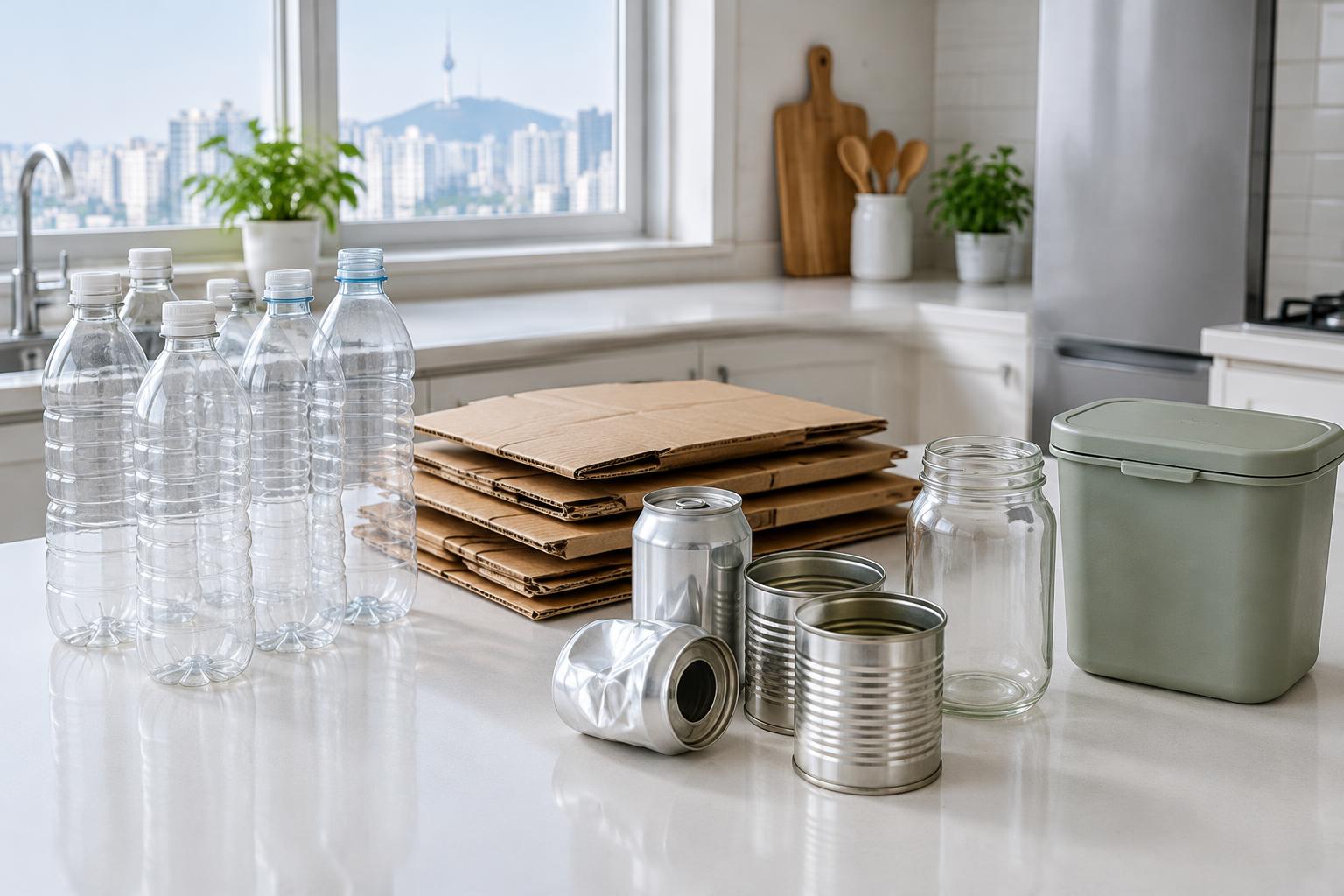
Recycling in Seoul: the right waste, in the right place.
Separate food scraps, clean recyclables and general rubbish — then follow your building’s collection arrangements. A small kitchen routine makes the system much easier.
- Ask your landlord or building manager where, when and how each waste stream is collected.
- Use the approved local bags or food-waste system — not any spare shopping bag.
- Empty containers, remove contamination and separate materials before recycling.
Your building’s rules come first
Seoul’s districts and buildings do not all use the same collection days, containers or food-waste payment system. Confirm your own address rather than copying the building next door.
- 01Find the collection point
Ask where general rubbish, food waste, recycling and special items belong. Apartment compounds may have a shared sorting area; smaller buildings may use a designated outdoor spot.
- 02Check the timetable
Record the permitted days and hours for each category, including holiday changes. There is no single collection timetable for all Seoul addresses.
- 03Buy the correct bags
Ask a nearby convenience store or supermarket for your district’s general-waste bags: 종량제봉투 (jongnyangje bongtu). Confirm any separate food-waste bags with your building.
- 04Set up three spaces
Keep a small food-scrap container, a general-rubbish bin and a dry recycling area. Separate the recycling further when taking it to the collection point.
쓰레기는 어디에, 언제 버리나요? [sseuregineun eodie, eonje beorinayo?] — Where and when should I put out the rubbish? Show your address and ask for the building’s instructions.
Use the local volume-based bag
General waste is the material left after food waste, accepted recyclables and special collections have been separated. Your district specifies the bags and disposal arrangements.
What goes here
- Used tissues, hygiene waste and other non-recyclable household rubbish belong in the approved general-waste stream.
- Packaging that cannot be cleaned sufficiently is not made recyclable just by having a recycling symbol.
- Food-waste exclusions such as bones and shells usually belong here; keep hazardous and non-combustible items separate.
What does not
- Do not mix ordinary food scraps or clean accepted recyclables into the general bag.
- Do not put batteries, fluorescent tubes or appliances in ordinary rubbish.
- Check the district’s special-bag instructions for ceramics, broken glass and other non-combustible waste.
Check before using bags left over from your previous home. Buy the approved bags for your current district; do not assume another district’s bags are accepted.
Food scraps are not everything from the kitchen
Use your building’s designated food-waste bags, container or RFID machine. Drain excess liquid and remove packaging, cutlery and other foreign materials first.
In the food-waste stream
- Ordinary leftover rice, noodles, edible vegetable scraps and soft fruit peel generally belong in food waste.
- Remove wrappers, toothpicks and plastic; drain soup and other excess liquid before disposal.
- Follow the building’s instructions for accessing and paying for an RFID food-waste machine, if provided.
Not food waste
- Meat and fish bones; shellfish and crustacean shells; eggshells.
- Hard fruit stones and nut shells; tough onion and garlic skins and corn husks.
- Tea bags, tea residue and coffee grounds. Follow a separate local collection only if one is explicitly provided.
The ‘could an animal eat it?’ rule of thumb is not a complete sorting list. Check the official exclusions when an item is unclear.
Empty, rinse, separate — then sort
Use the categories displayed at your building’s recycling point. Keep recyclables free of food and liquid; separate different materials where possible.
Clear PET drink bottles
- Empty and rinse transparent water and drink bottles; remove labels and flatten them.
- Follow the local instructions for replacing caps after flattening.
- Use the separate clear-PET stream. Coloured bottles and other plastic containers are not the same category.
Paper and cardboard
- Flatten boxes and remove tape and other non-paper attachments where possible.
- Keep paper dry and free of food contamination. Used tissues are not paper recycling.
- Milk and drink cartons may have a separate collection stream: check the labels at your collection point.
Cans and glass bottles
- Empty and rinse metal cans and glass bottles; separate removable non-matching parts.
- Use the labelled metal and glass collection areas, rather than mixing everything together.
- Broken glass, mirrors and ceramics are not bottle recycling.
Plastic packaging
- Empty and clean containers; separate detachable parts made from different materials.
- Check whether your building collects plastic films and bags separately.
- Do not assume every plastic object or mixed-material package is accepted: check the district guidance when uncertain.
Keep hazards out of the ordinary bins
Special waste needs the right collection route. Your district or community service centre can tell you which nearby collection point accepts the item.
Batteries and fluorescent tubes
- Use designated collection points, not general waste or mixed recycling.
- Ask building management or your community service centre where the appropriate bins are.
- Do not break tubes or dismantle batteries; seek specific handling advice for damaged or leaking items.
Broken glass and ceramics
- Never put shards in the glass-bottle recycling bin.
- Wrap sharp edges securely and warn the person handling the waste.
- Ask your district whether a special non-combustible sack is required for that material and quantity. Do not assume a regular bag is suitable.
Book furniture and appliance disposal before moving day
A mattress, desk or refrigerator is not ordinary bagged rubbish. Use your district’s bulky-waste service and confirm the building’s placement arrangements before leaving items outside.
- 01Identify the service
Find 대형폐기물 [daehyeong pyegimul] (bulky waste) on your district office’s website. Use only the booking route or app that your district accepts.
- 02Register and pay if required
Declare the item and size, check the fee and collection arrangements, then obtain the required sticker or booking reference. Fees vary by district and item.
- 03Label and place it correctly
Attach or display the required identifier and follow the agreed location and date. Do not block entrances or assume unregistered items will be collected.
- 04Check the appliance alternative
Eligible large appliances may qualify for free home collection through 1599-0903. Confirm eligibility, minimum quantities for small appliances and access requirements before booking.
The linked Gangseo-gu instructions illustrate the process. Residents elsewhere must use their own district’s service. Ask Seoul city information on 120 if you need help identifying the correct office.
Editorial guide based on official sources, reviewed 13 October 2026. Confirm current district and building arrangements before putting waste out.