D-10 in Korea: the three-year limit explained.
What changed for eligible Korean-university graduates, why an older official page still says two years, and what to check before planning your next step.
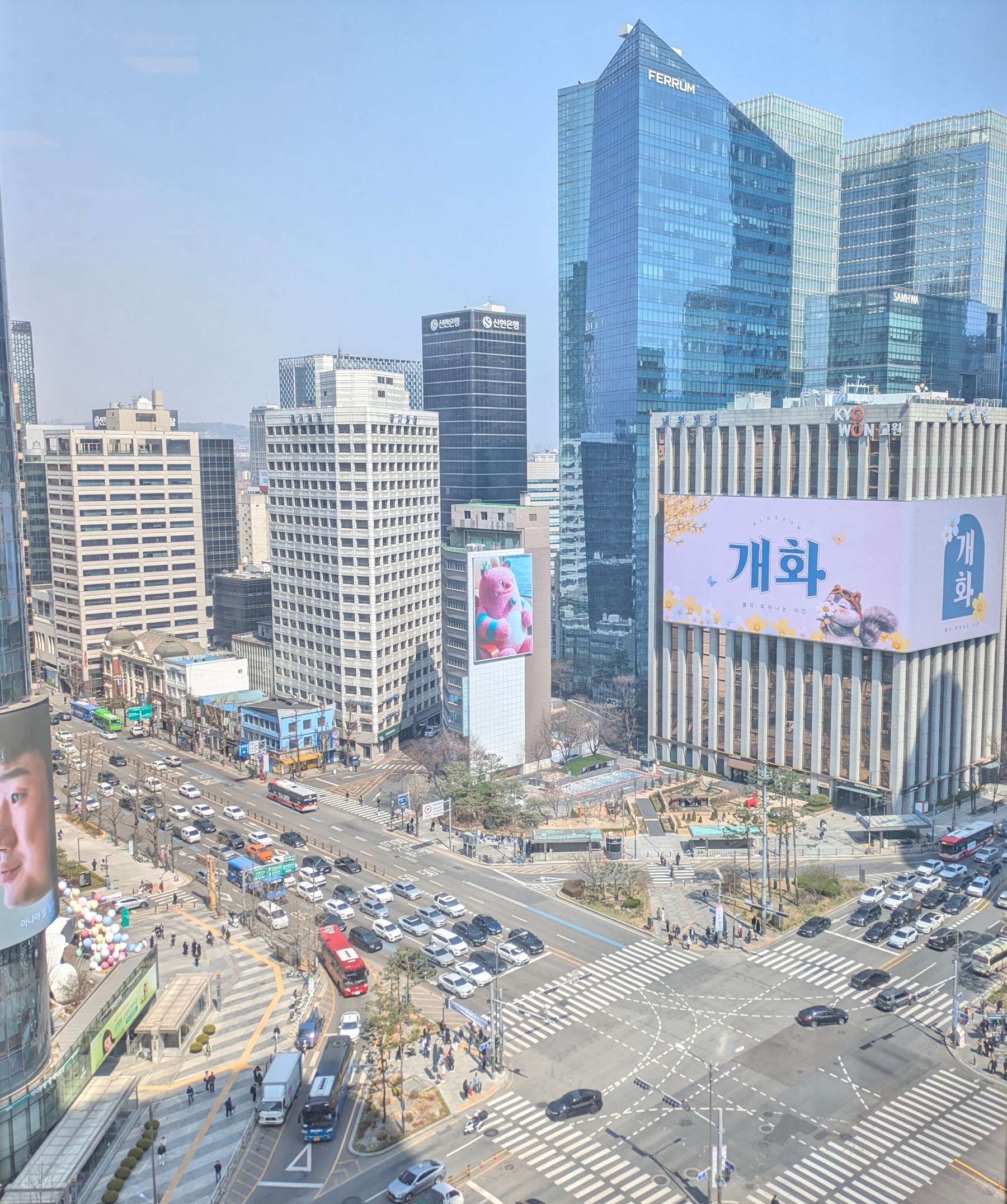
Photograph: Benjamin Jeary · Seoul
Reviewed 24 October 2026 · General planning guidance, not an individual immigration decision. This online-only page is separate from the original 2027 magazine and existing compiled guidebook PDF.
The difference at a glance.
Ministry of Justice · 2 December 2025
Up to 3 years
Extensions of up to 12 months at a time for the eligible Korean-university graduate group.
Read the dated announcement 27 October policy PDF · details on page 4Study in Korea · older Residence and Stay summary
Up to 2 years
The older summary describes 6-month extensions. Verify the newer arrangements for your application rather than relying on this duration alone.
Compare the older summaryThree years is a maximum for the eligible group — not an automatic three-year grant, a rule for every D-10 applicant or unrestricted permission to work.
Who this guide is for
D-10-1 is a professional job-seeking route for qualifying applicants, including eligible graduates from Korean universities. It is not a general permission to remain in Korea after any course, nor a substitute for a work status once you begin qualifying employment.
D-2 degree students and D-4 language trainees are different groups. Finishing a language course does not by itself establish eligibility for the graduate arrangements described here. Your degree, current status, qualifications and proposed activities matter. Ask immigration which D-10 route and evidence apply to you.
Why the official pages give different durations
The Ministry of Justice's 27 October 2025 policy release and its attachment describe the change from six-month periods with a two-year maximum to one-year periods with a three-year maximum. The release frames the graduate improvement around international graduates from domestic universities and gives an implementation date of 29 October 2025. Its 2 December 2025 announcement highlights the improvements again; that short page alone does not contain all the duration details.
The Study in Korea Residence and Stay page still describes six-month extensions up to two years. These are not two durations you may freely choose between, and the newer graduate arrangements should not be presented as a universal limit for every D-10 applicant.
Use the dated Ministry of Justice announcement to understand the announced change, then confirm the currently applicable instructions with HiKorea or 1345. Older government summaries are still useful for background, but should not determine a budget, lease or career plan without checking whether the newer arrangements apply to your application. Later instructions and individual conditions may affect the outcome.
A maximum period is not an automatic grant
The longer maximum does not mean that every applicant receives three years in one decision. A change of status and each extension remain subject to eligibility, evidence and immigration approval. Your actual authorised end date is the one granted for your stay, not a date calculated by adding three years to graduation.
Work backwards from your current permitted stay date. Check the application route and required documents early; do not assume that graduation, a pending job application or an employer's promise extends your permission to remain. Ask how previous job-seeking periods and your circumstances affect the maximum available to you.
Job seeking, internships and paid work are not the same
D-10 is intended for qualifying professional job-seeking and permitted activities, including certain internships. It is not an unrestricted work permit for cafés, delivery work, casual jobs, freelancing or remote work. Former student part-time permission should not be assumed to continue after changing status.
Before an internship, ask whether the exact duties, employer, duration and any required reporting or permission fit your approved conditions. A job-board advert, a 'training' label or an overseas client is not proof of immigration permission.
If you receive an offer for qualifying employment, confirm the appropriate work-related status and what must be approved before starting. A direct move from D-2 to a qualifying employment category may be possible for someone who meets its requirements; D-10 is not a compulsory intermediate step for every graduate.
Prepare the evidence, then confirm the checklist
Prepare your passport and residence card where applicable, academic evidence, a job-seeking activity plan, residence evidence and relevant qualification records. Ask which graduation or expected-graduation documents your university can issue and when.
Confirm the current application form, fees, filing route, financial-evidence requirements and any exemptions for your exact application. Do not assume an exemption applies because it appears in an older general summary. Keep copies of submitted documents and the decision confirming your permitted stay.
Questions to take to 1345 or your immigration appointment
- Do I qualify for the Korean-university graduate arrangements announced on 2 December 2025?
- What period can be granted for this application, and what evidence is needed for an extension?
- Does any previous D-10 stay affect my maximum period?
- Which current documents and financial evidence do I need?
- Is my proposed internship or paid activity permitted, and what must be reported or approved first?
- If I have a job offer, can I change directly to the appropriate employment status?
- When and how must I apply before my current permitted stay expires?
Take the next step.
Listings describe an employer's advert, not your legal eligibility. Confirm your own status and proposed activity before accepting work.