Learn the phrases that remove friction.
Romanisation is only a bridge. Listen to native audio and confirm Hangul spelling before relying on a phrase in a high-stakes situation.
- Choose one repeated context and practise the same small language set there.
- Pick a course you can actually attend around work and family.
- Aim first for introductions, numbers, dates, addresses, and transport.
Eight phrases for everyday Seoul
Start with the language that keeps ordinary moments moving.
- 01안녕하세요 · Annyeonghaseyo
Hello. A polite default greeting for shops, offices, colleagues, and neighbours.
- 02주세요 · Juseyo
Please give me… Combine with pointing or the item name.
- 03얼마예요? · Eolmayeyo?
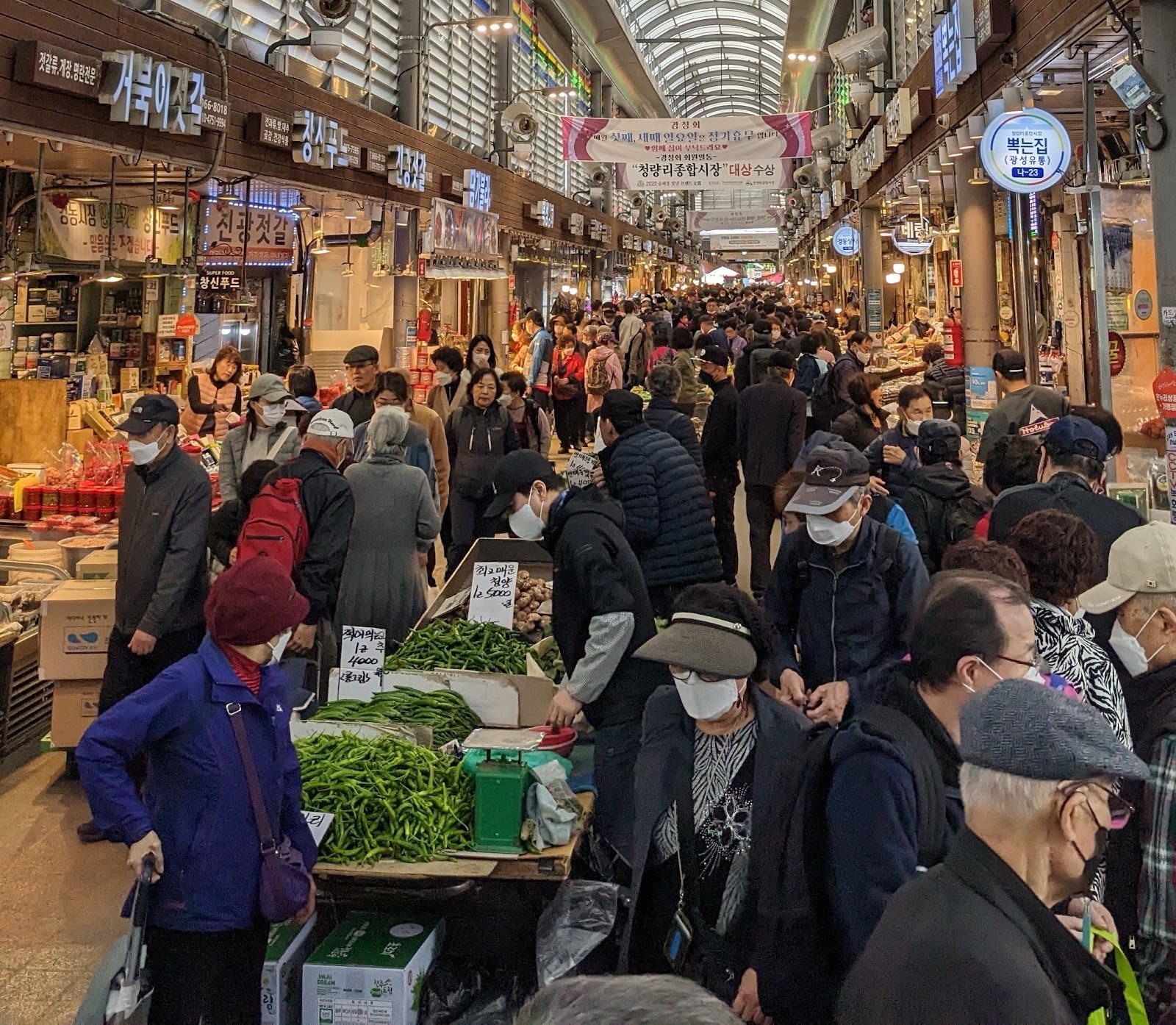
How much is it? Useful in markets and small shops.
- 04어디예요? · Eodiyeyo?
Where is it? Add the place or show the address.
- 05영어 돼요? · Yeongeo dwaeyo?
Is English possible? Ask early and politely.
- 06다시 말해 주세요 · Dasi malhae juseyo
Please say it again. Slow the conversation before guessing.
- 07잘 모르겠어요 · Jal moreugesseoyo
I am not sure / I do not understand well.
- 08도와주세요 · Dowajuseyo
Please help me. In danger, call the relevant emergency number too.
Choose one repeated context — coffee, taxi, work, market, or building management — and practise the same small language set there.
Read the letters before you memorise phrases
Hangul has 24 basic letters that stack into syllable blocks: 한 = ㅎ h + ㅏ a + ㄴ n. Most learners can sound out simple words within a few short sessions, which makes station names, menus and shop signs readable and lets you check a phrase's real spelling instead of trusting romanisation.
Session 1: vowels
- Learn ㅏ a · ㅓ eo · ㅗ o · ㅜ u · ㅡ eu · ㅣ i.
- Vertical vowels sit to the right of a consonant (가), horizontal ones underneath (고).
Session 2: consonants
- Learn ㄱ g · ㄴ n · ㄷ d · ㄹ r/l · ㅁ m · ㅂ b · ㅅ s · ㅇ (silent / ng) · ㅈ j · ㅎ h.
- ㅇ is silent at the start of a block: 아 is just a.
Session 3: read real signs
- Sound out 서울 Seo-ul, 출구 chul-gu (exit), 화장실 hwa-jang-sil (toilet).
- Then read your own station's name on the platform sign.
Keep going
- The full vowel and consonant chart, combined vowels and a printable bookmark are in our companion guide, A little Korean goes a long way.
- Pair reading with native audio: letters change sound at the end of a syllable.
Romanisation varies from sign to sign and app to app. Hangul does not — once you can read it, every phrase in this guide can be checked against the Korean.
Phrases for the places you go every week
Each phrase shows Hangul first, then romanisation, then meaning. Listen to native audio before relying on any of them.
Convenience store & supermarket
- 봉투 필요하세요? · Bongtu piryohaseyo? — Do you need a bag? (you'll hear this)
- 봉투 주세요 · Bongtu juseyo — A bag, please
- 카드로 할게요 · Kadeuro halgeyo — I'll pay by card
- 영수증 버려 주세요 · Yeongsujeung beoryeo juseyo — Please throw the receipt away
Taxi & transport
- (place) 가 주세요 · (place) ga juseyo — To (place), please
- 여기서 내려 주세요 · Yeogiseo naeryeo juseyo — Please let me off here
- 이 버스 (place) 가요? · I beoseu (place) gayo? — Does this bus go to (place)?
- 몇 번 출구예요? · Myeot beon chulguyeyo? — Which exit number is it?
Café & restaurant
- 포장해 주세요 · Pojanghae juseyo — To take away, please
- 여기서 먹을게요 · Yeogiseo meogeulgeyo — I'll eat here
- 물 좀 주세요 · Mul jom juseyo — Some water, please
- 덜 맵게 해 주세요 · Deol maepge hae juseyo — Less spicy, please
Building, clinic & office
- 택배 왔어요 · Taekbae wasseoyo — A parcel has arrived (you'll hear this)
- 예약했어요 · Yeyakhaesseoyo — I have a reservation / appointment
- 외국인등록증 있어요 · Oegugin deungnokjeung isseoyo — I have an ARC
- 천천히 말씀해 주세요 · Cheoncheonhi malsseumhae juseyo — Please speak slowly
Ending a request with 주세요 (juseyo) or a sentence with 요 (yo) keeps you polite with strangers. Save casual speech for friends who use it with you first.
Choose a course you can sustain
The fastest course is not useful if work, commuting, or family life makes regular attendance impossible.
Foreign-resident centres
- Seoul operates practical Korean classes through resident-support centres.
- Courses can range from beginner and daily life to TOPIK preparation.
- Locations, schedules, eligibility, and registration change by term.
University institutes
- Structured intensive programmes with a clear progression.
- Useful for study-focused learners able to commit significant time.
- Compare tuition, schedule, visa implications, and assessment style.
Online public resources
- Online King Sejong and other public platforms support flexible study.
- Combine lessons with real listening and speaking.
- Track a small number of useful patterns rather than collecting apps.
Language exchange
- Agree the time split and learning goal before meeting.
- Choose a public venue and protect personal information.
- A friendly conversation partner is not automatically a trained teacher.
Aim first to handle introductions, numbers, dates, addresses, transport, shopping, appointments, and one recurring work conversation.
Adapted from the digital edition revised 3 October 2026. Individual PDF pages retain their own source-review dates. Not independently verified — confirm official requirements before acting.