
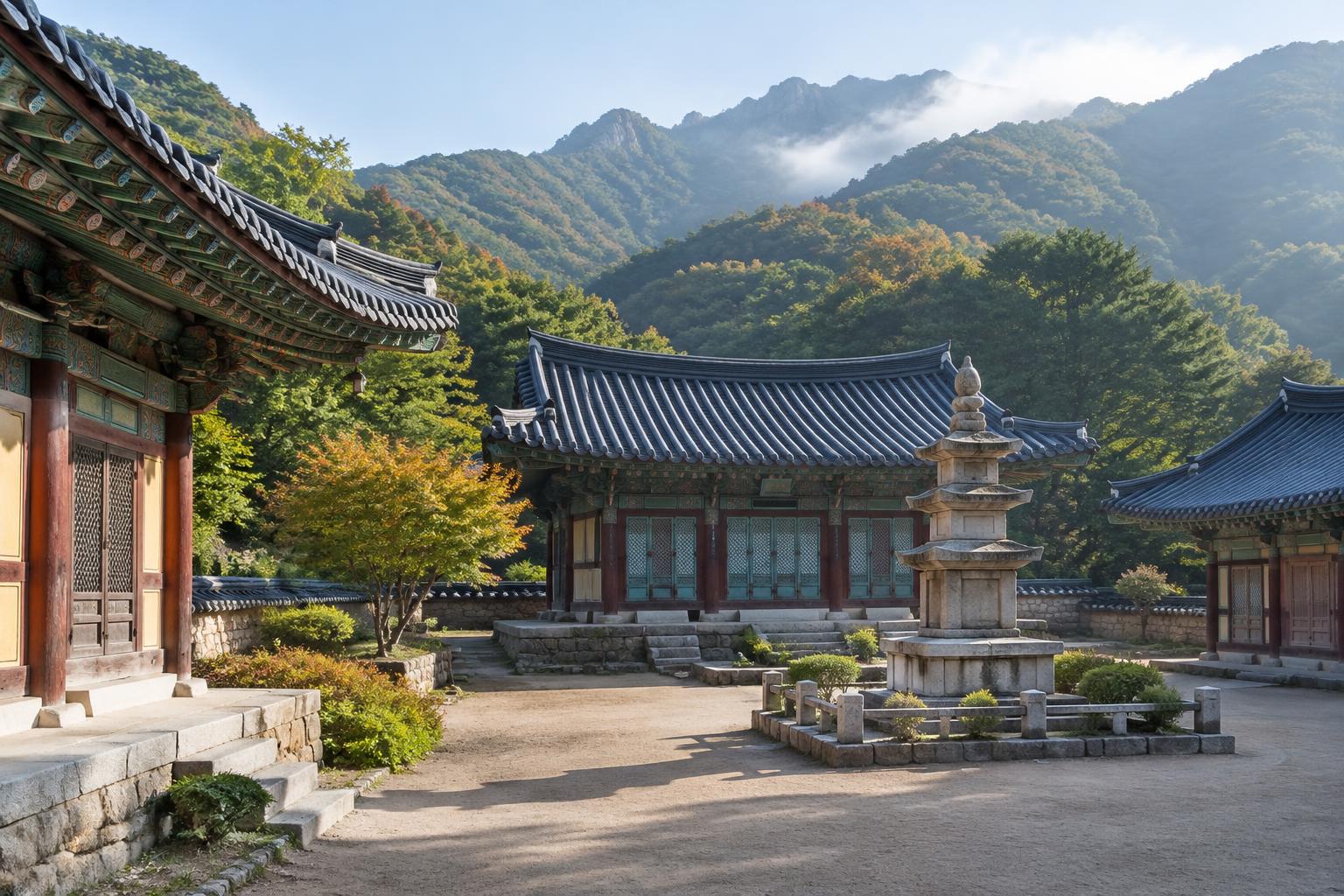
Visiting Korean Temples: Etiquette, Bowing & Symbols.
A friendly visual guide to Seoul’s mountain temples and Buddhist traditions.
Reviewed October 2026 · New online guide. General planning guidance; source types and verification limits are stated below. Not included in the original 2027 print edition; included in the complete Digital Guidebook.
- These are active religious communities, not open-access sets.
- A respectful secular visit is welcome in permitted areas; worship is optional.
- Book programmes and meals; do not assume casual visitors can join.
You do not need to be Buddhist to visit thoughtfully
A temple can be a place to slow down, notice painted woodwork, listen from a respectful distance and meet a quieter side of Seoul. You do not have to adopt a belief or imitate worship to be a good visitor. What matters is remembering that people live, practise and pray here: a beautiful courtyard is also somebody’s religious home.
Welcome has boundaries
- Visit only areas open to visitors. A door standing open is not permission to enter monastic accommodation, a kitchen, an office or a private meditation room.
- Read signs and follow staff or monastic guidance. Ceremonies, repairs and programme needs can change visitor access.
Observation is participation enough
- A quiet nod, a short bow or simply waiting respectfully is fine. Do not feel compelled to perform religious rituals, offer money or join chanting.
- Ask before photographing people or prayer spaces. Do not treat a monk or nun as a photo opportunity.
Where to begin around Seoul
Use the linked official tourism or programme information to check directions and current arrangements. No opening hours, guaranteed meal service or programme availability is invented here.
Jingwansa · 진관사
- In the Eunpyeong/Bukhansan setting near Eunpyeong Hanok Village; a rewarding first cultural visit with a mountain backdrop and a reputation for temple-food tradition.
- Make the temple and neighbourhood a calm day. Book any temple-food or Templestay experience through official information; casual admission does not include a meal.
Doseonsa · 도선사
- On the Ui side of Bukhansan. Visit Korea places it in the mountain landscape; a hiking itinerary may pass it, but reaching it from the train involves a substantial uphill approach.
- Use the actual official directions and your selected route. Do not confuse the short station-to-tourism-centre walk with temple access, and do not presume a shuttle or programme is operating.
Geumsunsa · 금선사
- A mountain temple in the Gugi-dong area with official Templestay programmes. It suits a deliberately booked retreat rather than an improvised drop-in overnight stay.
- Confirm the walking approach, language, fee, dates and arrival deadline in the official booking listing. Programme content can change with weather and temple circumstances.
Hapjang, then a small bow
합장 (hapjang) means bringing the palms together. 반배 (banbae) is a half-bow. Official Templestay guidance describes hapjang banbae as a respectful greeting to a monk outdoors. It is a greeting you may choose, not a requirement to practise Buddhism. A discreet nod or bow is also a considerate way to acknowledge someone.
01 · Hapjang · 합장
Palms together at chest; shoulders relaxed.
02 · Banbae · 반배
Keep palms together; incline gently and return upright.
Do not interrupt someone chanting, meditating, working or speaking with others. If a monastic is occupied, let them continue. Three full prostrations are optional religious devotion, not compulsory visitor etiquette.
A few respectful Korean phrases
스님 (seunim) is a respectful form of address for a Buddhist monk or nun. Speak softly, allow a response and accept that conversation may not be convenient. Romanisation is a pronunciation bridge, not a substitute for listening; showing the Hangul can help.
스님, 안녕하세요.
Seunim, annyeonghaseyo.
Hello, Venerable / hello to a monk or nun.
스님, 잠시 여쭤봐도 될까요?
Seunim, jamsi yeojjwobwado doelkkayo?
Venerable, may I briefly ask a question?
감사합니다.
Gamsahamnida.
Thank you.
사진을 찍어도 될까요?
Sajineul jjigeodo doelkkayo?
May I take a photograph?
여기에 들어가도 될까요?
Yeogie deureogado doelkkayo?
May I enter here?
Ten small acts of consideration
The temple’s own signs and instructions take priority. General Templestay guidance recommends using side doors for Dharma halls instead of the central entrance. Where the hall is open to visitors, enter quietly, remove shoes and avoid disturbing people already practising.
Shoes off
Where required at hall entry; leave them neatly.
Side door & threshold
Use the appropriate side door; step over the threshold.
Quiet presence
Silence phones; do not interrupt chants or meditation.
Ask before photos
Especially halls, ceremonies and people.
Private means private
No lodging, closed rooms or ritual objects without permission.
No alcohol
Keep temple grounds free of drinking.
No smoking
Follow the temple’s boundaries and signs.
No compulsory prostrations
A secular visit can be respectful without worship.
At the hall door
- Remove shoes where required and leave them neatly; do not carry dirt across the floor. Wear socks when appropriate and follow the posted arrangement.
- Use a side door where appropriate; do not assume every building has the same entrance rule. Step over, not on, the raised threshold. If unsure or unsteady, ask for help instead of forcing entry.
Inside and around ceremonies
- Keep voices and phones quiet. Dress modestly and avoid blocking the altar, aisles or worshippers. Observe rather than copying gestures you do not understand.
- Do not interrupt chanting or meditation. Photograph only where permitted, especially inside prayer halls and during ceremonies; never presume no flash is the only restriction.
Outside the public courtyard
- Stay out of lodging and private quarters. Do not touch ritual objects, statues or instruments simply because they are visible.
- No alcohol or smoking on temple grounds. Keep food and litter contained; ask where any permitted eating area is rather than turning a courtyard into a picnic spot.
Gates, halls and symbols: a visual field guide
A Korean temple does not always unfold in one standard order. Different traditions, terrain and rebuilding histories produce different layouts. Learn a few names so you can notice what is actually there, without assuming every temple must have every structure.
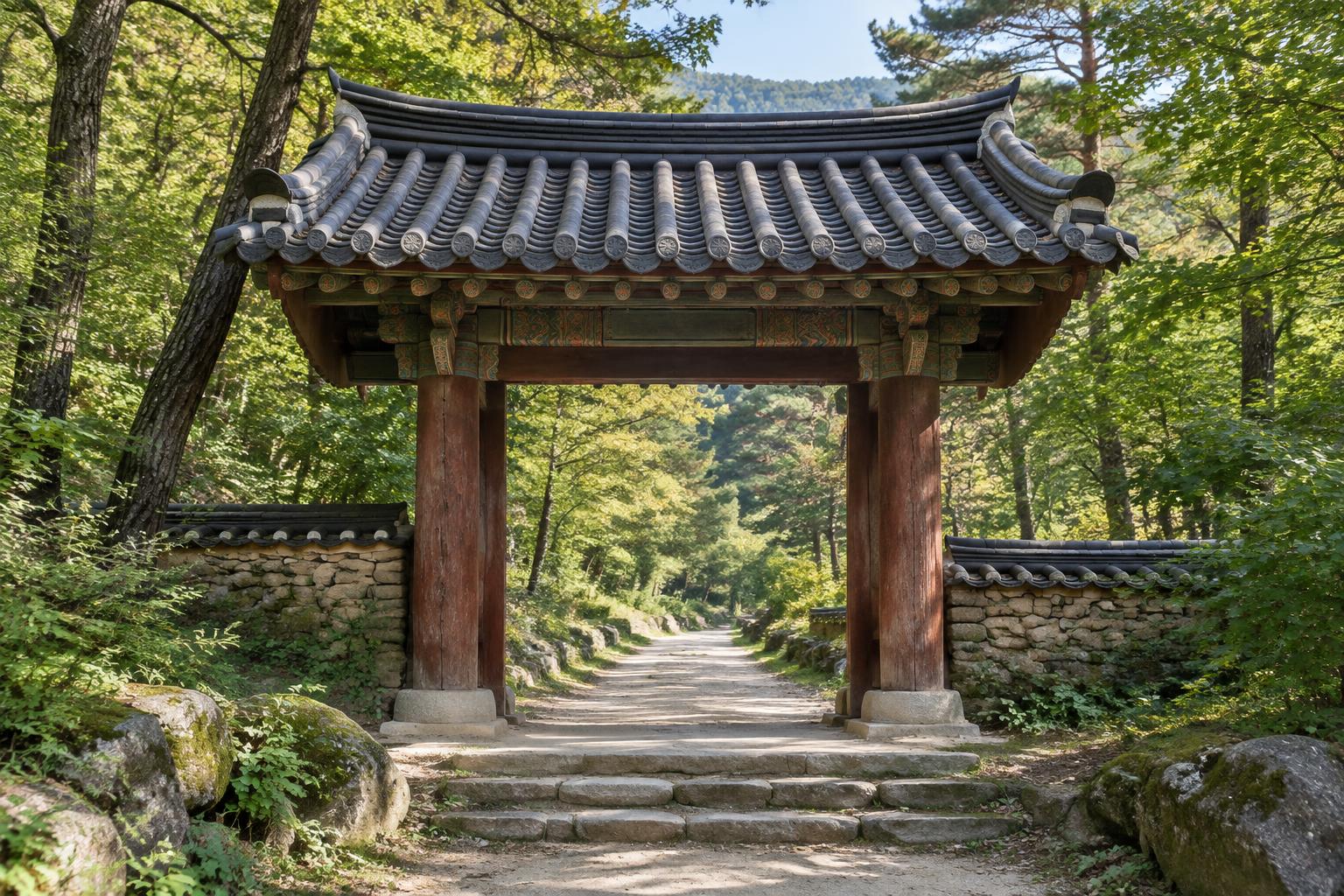
일주문 · Iljumun
First gate
Often the first formal gateway: a transition from ordinary bustle to temple space. Its pillars appear in a single line from the side; not every entrance has one.
사천왕문 · Sacheonwangmun
Four Heavenly Kings gate
Guardian figures protect the Buddhist teaching and the four directions. Their dramatic appearance is symbolic, not an invitation to climb or touch them.
대웅전 · Daeungjeon
Main Buddha hall
A common name for a principal hall honouring Shakyamuni Buddha. Some temples use other hall names or arrangements; read the sign rather than assuming.
석탑 · Seoktap
Stone pagoda
A monument associated with Buddhist relics and devotion. Observe from the path; do not climb it or place objects on historic stonework.
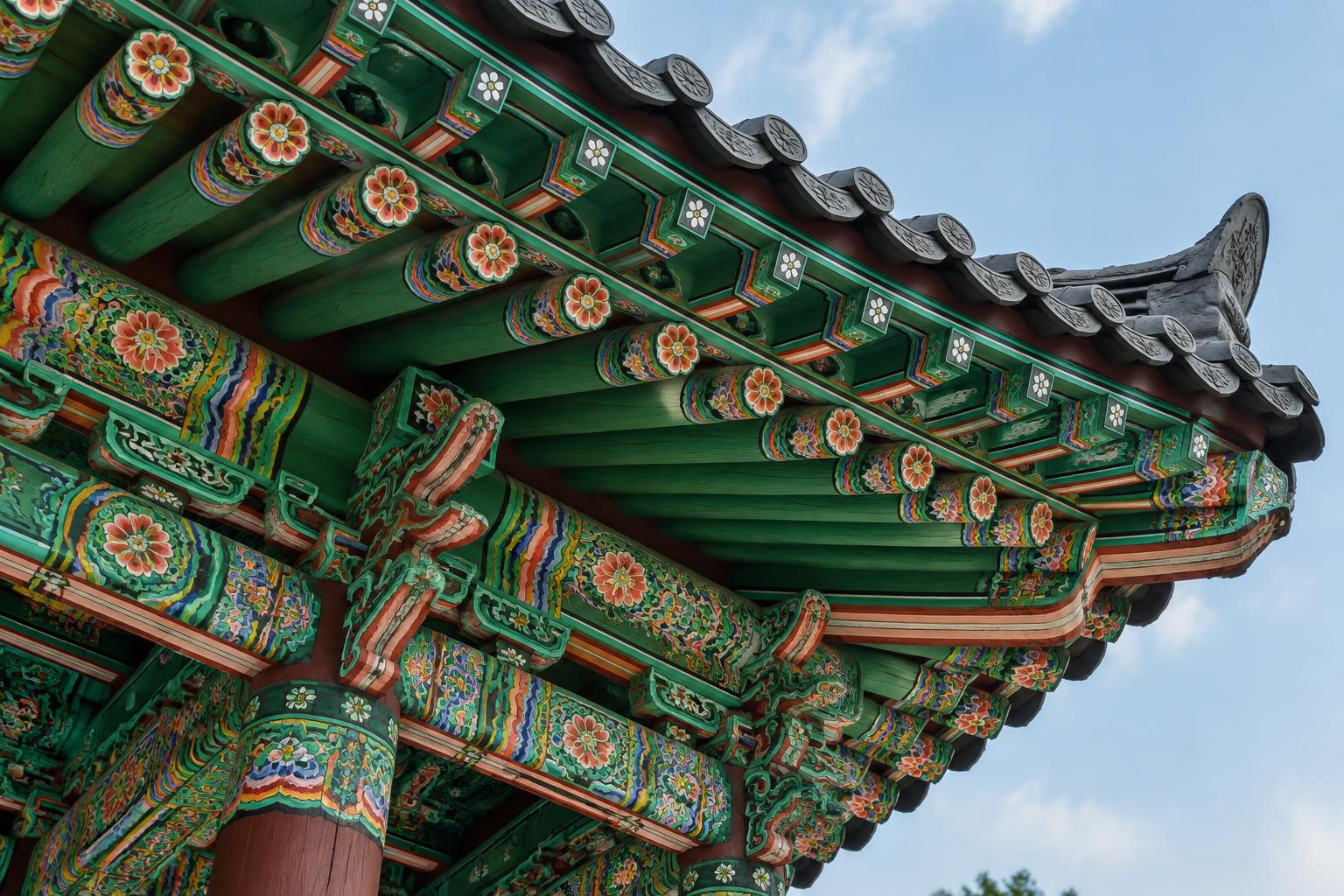
단청 · Dancheong
Painted woodwork
Ornamental polychrome patterns protect and adorn timber, with repeated flowers and geometry. Look up at the eaves without entering closed buildings.
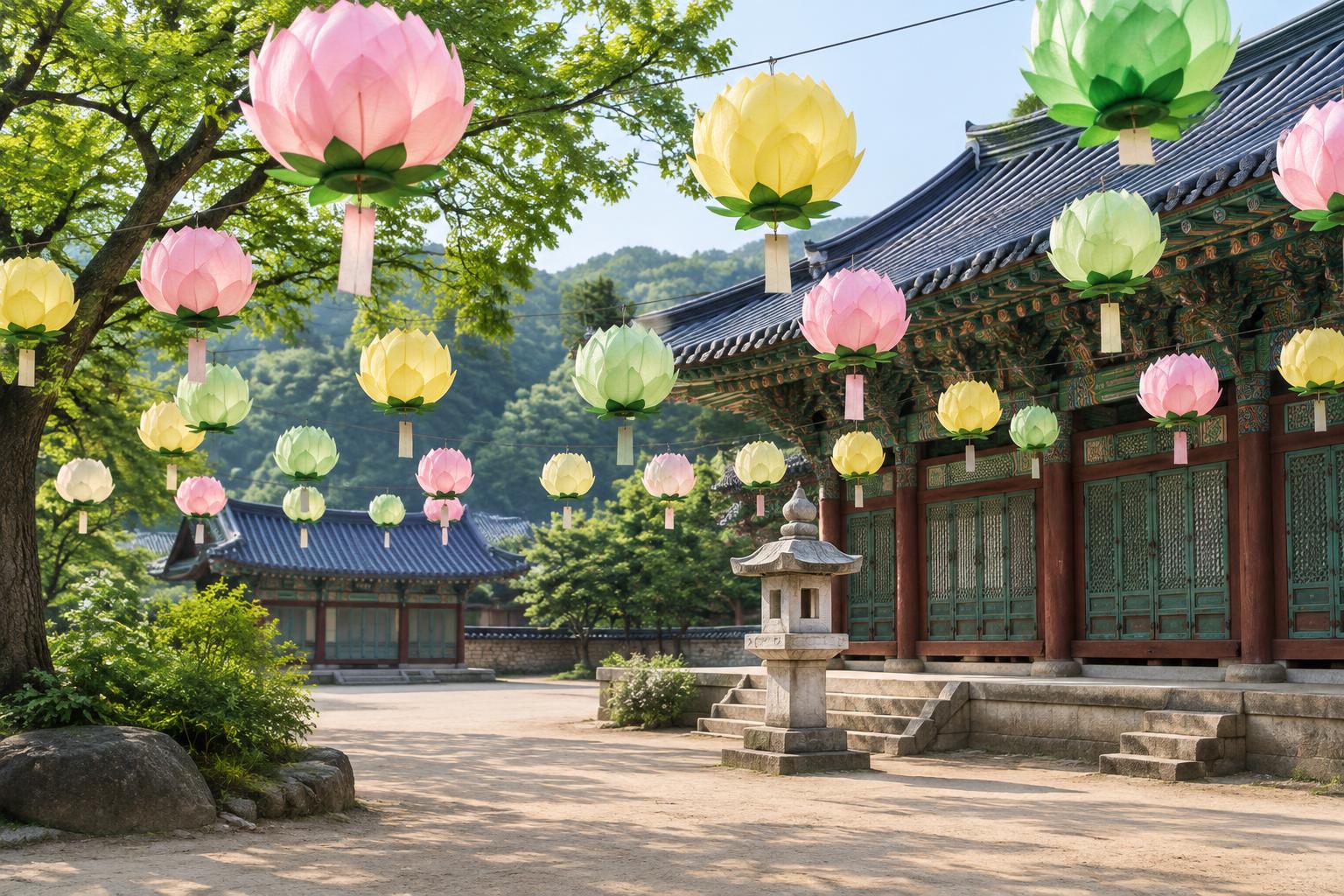
연등 · Yeondeung
Lotus lantern
Lanterns express light and wisdom, especially around Buddha’s Birthday. Do not assume a display marks a ceremony open to all visitors.
연꽃 · Yeonkkot
Lotus flower
The flower rising from muddy water is associated with purity and awakening. It appears in painting, sculpture and lantern design.
법륜 · Beomnyun
Dharma Wheel
A wheel represents Buddhist teaching; eight spokes commonly evoke the Noble Eightfold Path. Designs and settings vary.
만자 · Manja
An ancient Buddhist symbol
The small 卍 sign has a long Buddhist history in Asia and may mark a temple on signs or maps. In this religious context it is not an endorsement of Nazi ideology. Interpret it sensitively and in context.
Dancheong and lantern light
단청 (dancheong) draws the eye upward: repeated colours, flowers and geometric patterns give timber buildings a distinctive rhythm. 연등 (yeondeung), often lotus-shaped, evokes light and wisdom. These are meaningful parts of a living tradition, not simply a decorative photo backdrop.
Look without intruding
- Admire eaves from a public path. Avoid stepping into closed spaces for a better angle or leaning equipment against painted timber.
- Lantern displays and Buddha’s Birthday celebrations can draw large crowds. Follow ceremony access and photography notices; a display does not promise public programme participation.
Symbols need context
- The lotus can suggest purity and awakening; the Dharma Wheel points to Buddhist teaching. Meaning is richer than a single caption.
- The small Buddhist manja sign has ancient Asian religious usage. Explain it sensitively in its temple context rather than confusing it with Nazi ideology or using it as gratuitous decorative art.
What a Templestay can include
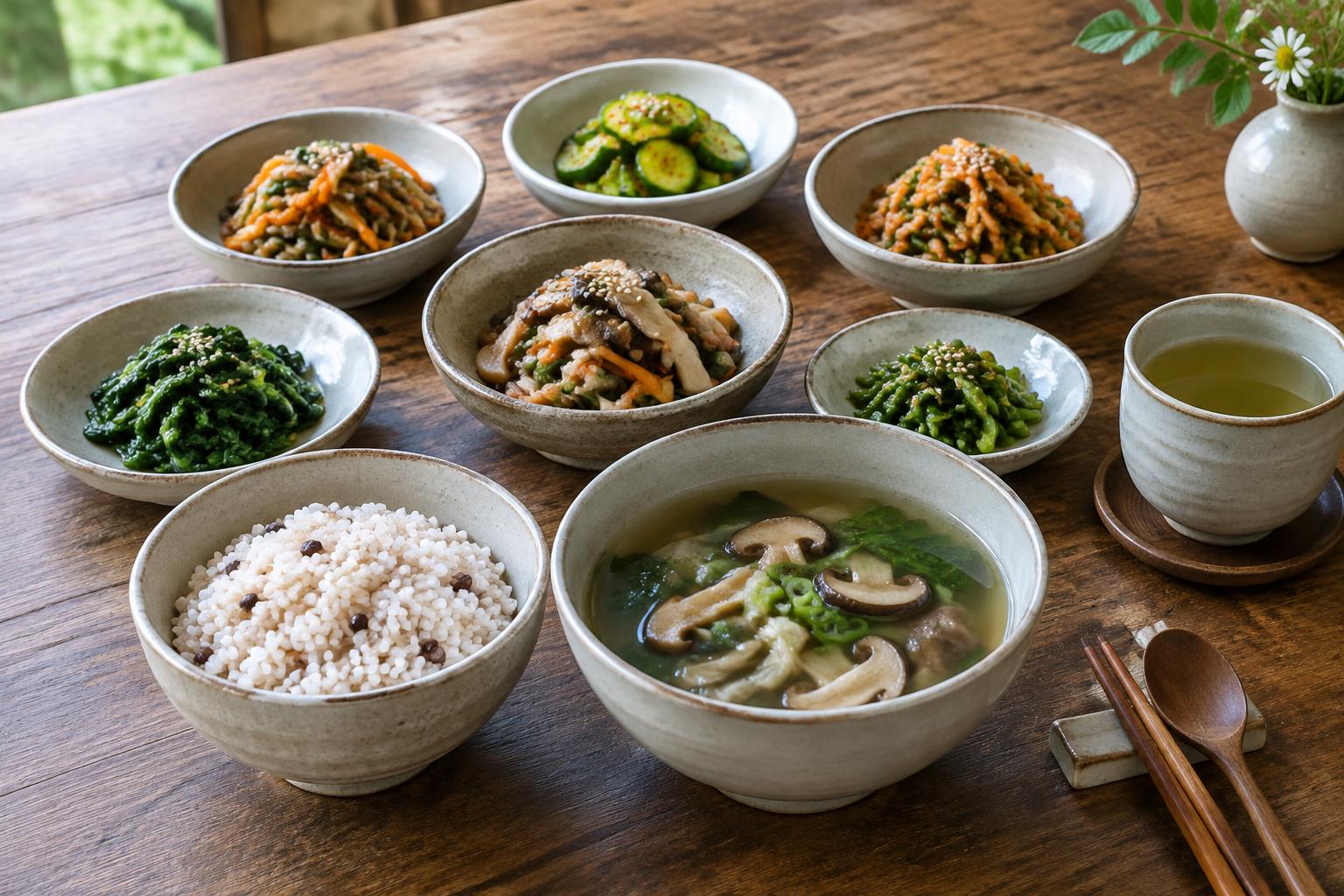
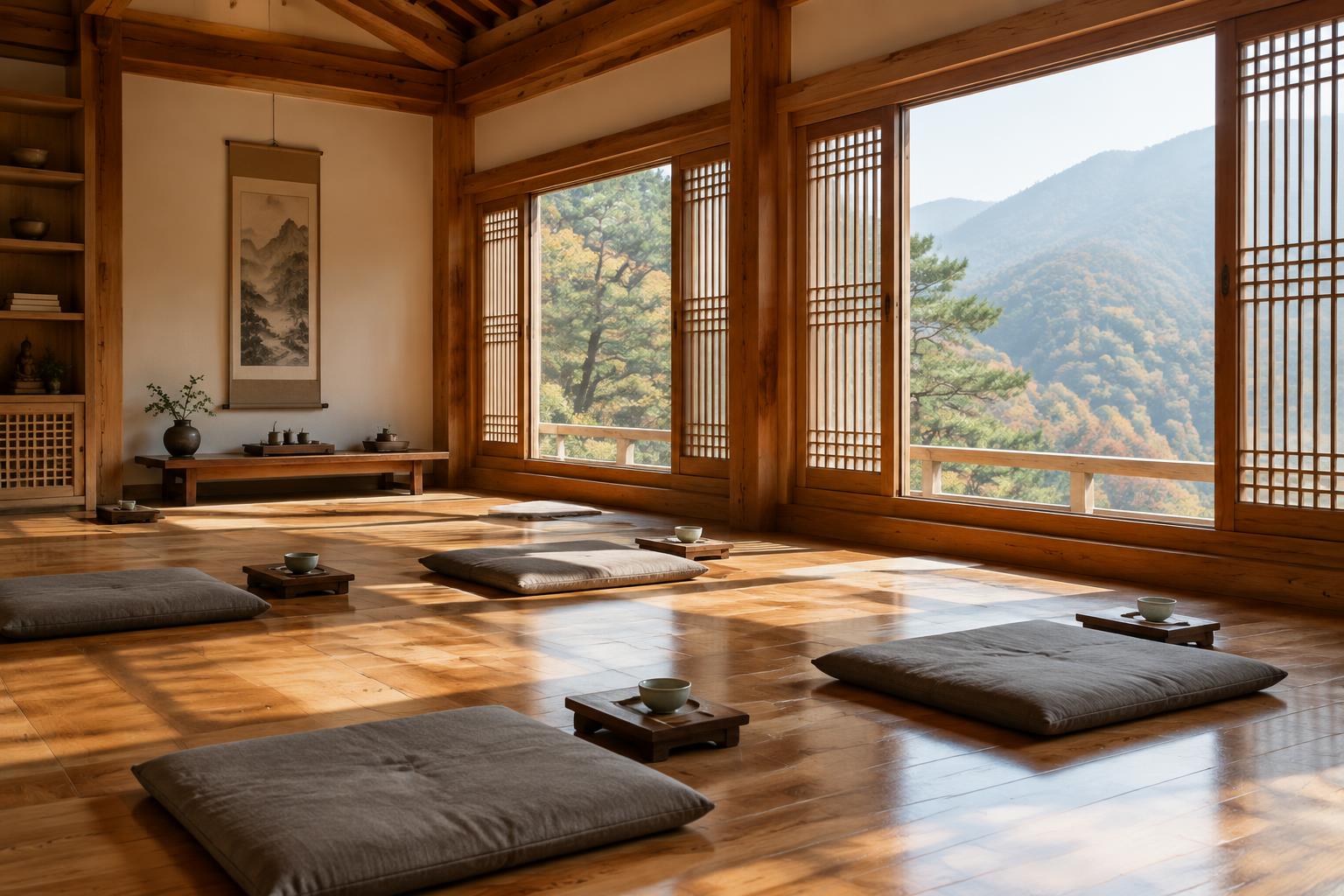
Templestay opens a structured window into monastic life. Depending on the programme, you might encounter meditation, 예불 (yebul, chanting ceremony), tea practice or 다선 (daseon), vegetarian temple food and sometimes 108 bows. None of these is universal or guaranteed: a rest-focused programme and an experiential programme may be quite different.
Check the actual programme
- Book through the official listing. Check the current fee, language, arrival time, schedule, cancellation policy, room arrangements and what is included.
- Ask about mobility, floor sitting, dietary needs and any ritual you may prefer to observe rather than perform. Vegetarian temple food is not automatically free from every allergen.
Let the temple set the rhythm
- Early starts, shared facilities and quiet periods may be part of the experience. Respect programme instructions and the community’s working religious life.
- Do not expect hotel-style service, unlimited access or an unannounced walk-in meal. A photographed bowl of temple food here illustrates the idea, not a promised Geumsunsa or Jingwansa menu.
Casual visit, day programme or overnight?
Choose the experience that fits your time, comfort and interest. Checking practical arrangements in advance is an act of respect, not an unnecessary formality.
Temple visit checklist
0 of 4 checks complete
Three thoughtful combined outings
These are themes to plan, not guaranteed routes or timed packages. Save the actual temple approach and return transport; slopes, stairs and schedules remain part of the day.
Jingwansa + Eunpyeong Hanok Village
- An approachable cultural pairing: a respectful temple visit, residential hanok streets and a gentle open path if conditions suit. Keep voices low near homes and do not presume a temple-food lunch without booking.
Ui train + your chosen Bukhansan trek
- Seek hiking-centre advice first. Add Doseonsa only if its uphill approach and permitted visitor areas fit your confirmed course and daylight. It is not a trivial walk from the rail platform.
Geumsunsa, deliberately booked
- Let an official day or overnight Templestay be the anchor. Follow arrival instructions and allow a comfortable approach instead of squeezing it after an exposed summit.
Editorial guide based on official sources, reviewed October 2026. Confirm current requirements with the responsible office before acting.