
Shopping & setting up home.
From your first supermarket trip to furnishing your apartment.
- Check what your accommodation already includes before you buy anything.
- First night: only what you need tonight. First week: make the home usable.
- Measure rooms and access routes before ordering furniture.
Where should I go?
Photograph the space, measure storage areas and ask about supplied bedding, appliances and furniture first. These are starting points, not price rankings — stock, services and value vary by branch.
Everyday needs
- Drink, quick meal or forgotten essential: GS25, 7-Eleven or a nearby convenience store.
- Cleaning tools, hangers, kitchen utensils, small storage: Daiso.
- Groceries and a bigger household shop: E-mart or a local supermarket.
- Skincare, cosmetics, haircare: Olive Young.
Home and more
- Clothing: Zara, department stores and local shops.
- Furniture: IKEA, Hanssem or online furniture retailers.
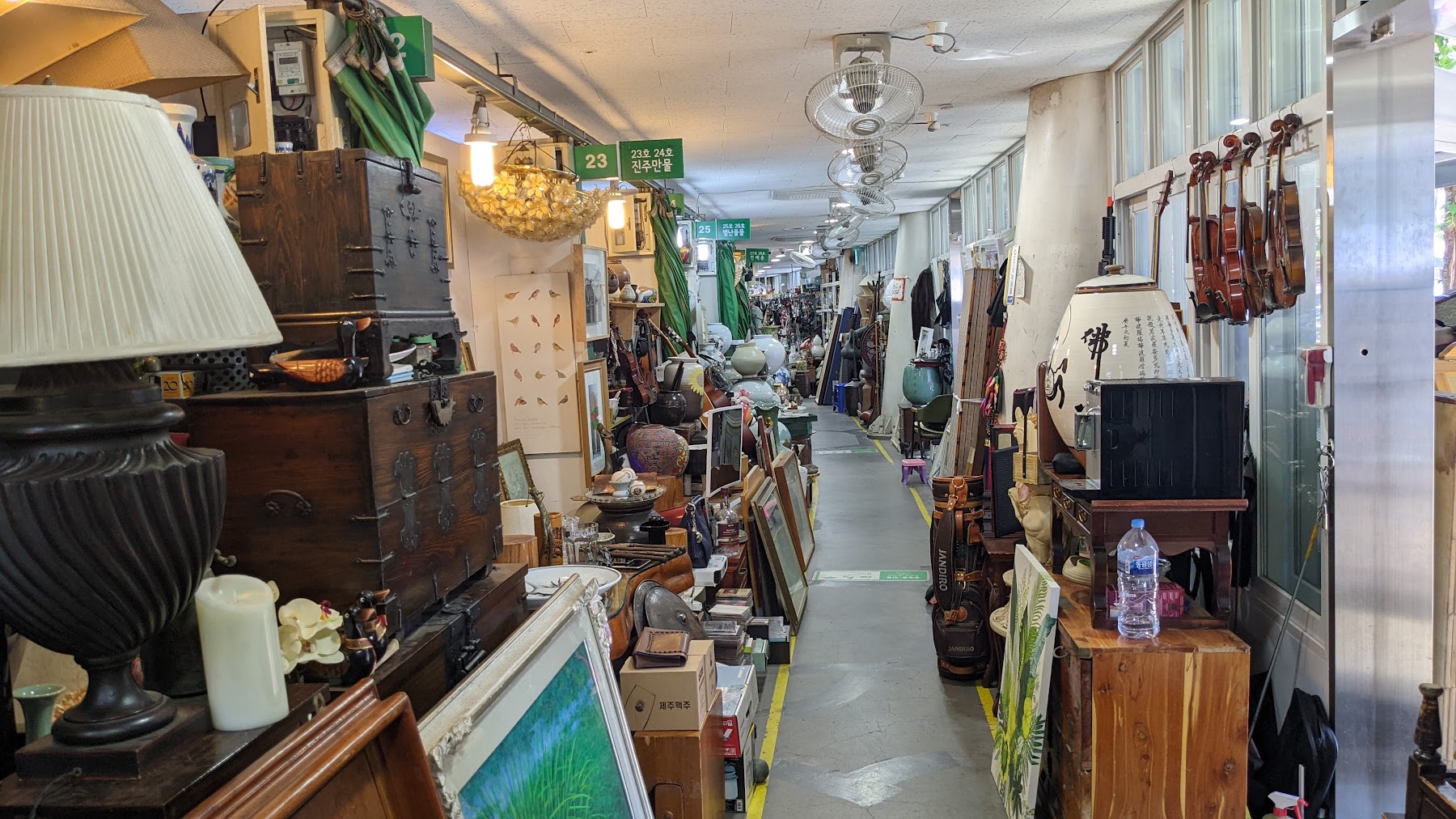
- Second-hand: Daangn and local resale shops.
- Produce and side dishes: your neighbourhood traditional market.
- Branded goods, gifts, food halls: Shinsegae, Lotte or Hyundai.
First night, then first week
A nearby convenience store can cover tonight's gaps. Leave the larger household shop until you have checked the apartment properly.
First evening
- Toilet paper and hand soap.
- Toothbrush, toothpaste and shower essentials.
- A towel.
- Drinking water and a simple meal.
- Bedding, if none is supplied.
- A suitable charger or adaptor.
First week
- Kitchen: bowl, plate, mug, cutlery, food container, washing-up liquid, sponge.
- Laundry: detergent for your machine, hangers, a drying solution.
- Bathroom: cleaning tools, bathmat, missing toiletries.
- Bedroom: correctly sized bedding, laundry basket.
- General: reusable bag, measuring tape, small storage.
Wait before buying
- Large storage units, a desk, extra appliances and decorative furniture — a few days in the space shows what you really need.
Check your building's waste instructions before buying rubbish or food-waste bags. Ordinary bin liners may not be the bags required for collection.
Daiso: the first stop for everyday essentials
Daiso's departments cover a surprisingly wide range of everyday needs, so you may tick off several moving-in items in one visit. Stock varies by branch, size and season.
Home departments
- Kitchen: bowls, plates, mugs, cutlery, chopsticks, chopping boards, strainers.
- Food storage: containers, lunchboxes, bottles, sealing clips, zip bags.
- Cleaning: sponges, brushes, cloths, rubber gloves, lint rollers, dustpans.
- Laundry: hangers, laundry nets, pegs, baskets.
- Bathroom: shower baskets, soap dishes, drain strainers, slippers.
- Storage: drawer dividers, baskets, boxes, hooks, shoe and cable organisers.
Everything else
- Stationery and study: notebooks, pens, folders, labels, desk organisers.
- Arts and crafts, beauty and grooming, travel pouches and bottles.
- Phone stands, cables and small desk accessories.
- Sewing kits, felt furniture pads and basic tools.
- Plants, pets, gift wrap and seasonal items.
Shop efficiently
- Bring measurements for drawers, cupboards and shelves.
- Check each item's price — not everything costs the same.
- Read size, material and usage labels.
- Buy a few organisers before committing to a whole system.
Photograph the cupboard or awkward corner you are shopping for. It is much easier to compare products when you can see the space.
Supermarkets and Olive Young
Use a larger supermarket trip for groceries, cleaning products and household supplies. Check your branch's opening hours and closure dates — not every E-mart follows the same schedule.
E-mart first visit
- Bring reusable bags.
- Compare unit prices, not just package prices.
- Check whether discounts need membership, a particular card or multiple purchases.
- Buy quantities that fit your fridge and storage.
- Plan how you will carry bulky purchases home.
Olive Young tips
- Bring a photo of a product you already use.
- Check whether it is full-size, refill, miniature or a promotional set.
- Compare the total quantity in a bundle.
- Use the domestic Korean shop for delivery within Korea.
- Start small with unfamiliar products.
For medicine or advice about a medical condition, look for a pharmacy marked 약국 [yakguk].
Convenience stores: GS25 and 7-Eleven
Best for filling a gap today. Compare prices with supermarkets for your regular shop. Do not assume every branch is open all night or offers parcel services or seating.
Offer labels
- 1+1 — buy one qualifying item, get another.
- 2+1 — buy two qualifying items, get one more.
- 행사상품 [haengsa sangpum] — promotional item.
- Check which products qualify, and ask before mixing flavours or brands.
Clothing, IKEA, Korean retailers and second-hand
Check measurements rather than relying on S, M and L, keep tags and receipts, and read return conditions before paying. For furniture, delivery and assembly are separate decisions.
이케아 [Ikea]
- Useful for comparing dimensions and coordinating bedding, lighting, kitchenware and storage.
- Offers delivery and optional assembly for eligible orders; its Korean guidance lists a ₩30,000 minimum assembly charge — confirm the current quote.
Korean retailers
- Hanssem: furniture, home furnishings and interior services.
- 오늘의집 [Oneurui jip] — Ohouse: online home shopping; delivery and installation differ by seller.
당근 [Danggeun] — Daangn
- Neighbourhood second-hand trading for desks, chairs and shelves.
- Confirm condition, measurements, collection time and who moves it.
- Inspect where practical; never pay through unfamiliar links sent in messages.
- 01Measure
The room and the access route: doorway, corridor, stairs and lift.
- 02Check the complete product
Does the bed include a mattress? Does the wardrobe include its fittings?
- 03Confirm delivery
To the entrance, doorstep or inside the room?
- 04Confirm assembly
Included, optional or your responsibility?
- 05Ask about access charges
Stairs, difficult access or specialist lifting.
- 06Check removal
Packaging and old furniture may need separate arrangements.
- 07Read cancellation terms
Especially for made-to-order items. Compare the delivered and assembled price, not the headline price.
Department stores
Useful for comparing products in person or buying a carefully chosen gift. Check the floor directory when you arrive — food halls are often on lower floors, but layouts vary.
신세계 [Sinsegye] — Shinsegae
- Main Store near Myeongdong/Namdaemun; Gangnam branch.
롯데 [Rotde] — Lotte
- Myeongdong Main Store; other branches through its directory.
현대 [Hyeondae] — Hyundai
- The Hyundai Seoul in Yeouido; other branches through its directory.
A department store, shopping mall, outlet and duty-free shop are different formats, even under the same brand. For an everyday essentials trip, start with a supermarket or household shop.
Traditional markets: useful as well as enjoyable
Your nearest market may be especially good for produce and prepared side dishes. A famous market is not automatically the cheapest.
Markets to explore
- 남대문시장 [Namdaemun sijang]: clothing, accessories, household goods.
- 경동시장 [Gyeongdong sijang]: produce, ingredients, herbal-medicine area.
- 망원시장 [Mangwon sijang]: neighbourhood food shopping and snacks.
- 광장시장 [Gwangjang sijang]: market food and textiles.
- 통인시장 [Tongin sijang]: smaller Seochon market known for its lunchbox experience.
- 동묘벼룩시장 [Dongmyo byeongnyuk sijang]: second-hand clothes and vintage finds.
Shop comfortably
- Bring a reusable bag and some cash alongside your card.
- Ask whether the price is per item, pack, basket or weight.
- Confirm the total before buying.
- Ask before handling produce or taking close-up photos.
- Do not assume bargaining is expected.
- Stalls keep their own hours.
Useful shopping Korean
Romanisation follows Revised Romanisation, the system on Seoul's street and station signs.
At the till
- 이거 얼마예요? [igeo eolmayeyo?] — How much is this?
- 카드 돼요? [kadeu dwaeyo?] — Can I pay by card?
- 봉투 주세요. [bongtu juseyo] — A bag, please.
- 영수증 주세요. [yeongsujeung juseyo] — A receipt, please.
- 다른 사이즈 있어요? [dareun saijeu isseoyo?] — Do you have another size?
Delivery and returns
- 배송 가능해요? [baesong ganeunghaeyo?] — Is delivery available?
- 배송비가 얼마예요? [baesongbiga eolmayeyo?] — How much is delivery?
- 조립비가 포함돼 있어요? [joripbiga pohamdwae isseoyo?] — Is assembly included?
- 교환이나 환불이 가능해요? [gyohwanina hwanburi ganeunghaeyo?] — Can I exchange or return it?
Keep your first shopping route simple — household basics, groceries and toiletries. Furnish the rest gradually, once you know your space. Ranges, hours, delivery charges and services vary, so check the branch or product page first.
Editorial guide based on official sources, reviewed October 2026. Confirm current requirements with the responsible office before acting.